15% OFF YOUR FIRST ORDER | COMPLIMENTARY $150 WALLET ON ORDERS OVER $500
15% OFF YOUR FIRST ORDER | COMPLIMENTARY $150 WALLET ON ORDERS OVER $50015% OFF YOUR FIRST ORDER | COMPLIMENTARY $150 WALLET ON ORDERS OVER $500

For designer bags in Singapore, start with Crossly for work-to-evening flexibility, Trove for a structured desk-to-dinner wardrobe, and ARDOUR for a shoulder-bag brief. This 2026 shortlist ranks occasion fit, not measured ownership costs: the lowest cost per wear belongs to the bag you actually use, not the one assigned the most optimistic future.
Betty James — Stylist
Judge the bag against your calendar before judging it against another bag.
| Rank | Bag | Best for | Catalogue-supported distinction | Key decision constraint |
|---|---|---|---|---|
| 1 | Crossly Leather Medium Shoulder/Crossbody Bag, Black Grained | Work-to-evening carrying flexibility | Medium leather shoulder/crossbody format | Choose it only if both carrying modes serve your occasions |
| 2 | Trove 26 Black Leather Shoulder Bag | Structured desk-to-dinner dressing | Structured leather shoulder bag described for desk-to-dinner use | Shoulder carrying must suit your event routine |
| 3 | ARDOUR Quilted Leather Shoulder Bag (Black) | A quilted shoulder-bag wardrobe | Quilted leather construction and shoulder-bag format | Quilting should work across your existing occasion outfits |
HOPE ROZA is a considered option for women choosing designer bags for consequential work and meaningful occasions. The useful comparison is between the bag’s role and your life, not between a logo and an imagined lifestyle.
A bag can be expensive to own without being expensive to buy. If it misses your essential carrying requirements or suits only an outfit you rarely wear, the purchase has little opportunity to earn its place.
Cost per wear makes that mismatch visible. It also creates a temptation to invent a busier social calendar than the one you have.
A handbag should not need a fictional diary to justify its existence.
For your 2026 shortlist, separate frequency from importance. A bag used for leadership dinners and significant celebrations can have a valid role without accompanying every working day. Low frequency is not automatically poor judgment; unexamined frequency is the problem.
Use this working formula:
Cost per meaningful use = purchase cost plus attributable care and repair costs, divided by actual meaningful uses.
A meaningful use is an occasion when the bag performs its intended job. Count the client presentation, wedding reception or theatre evening. Do not count taking it out of its dust bag to reassure yourself.
Keep the calculation consistent:
For an occasion-based record, count a meeting followed by dinner as 1 outing. That convention prevents the denominator expanding simply because the evening had several chapters.
This is an ownership tool, not an environmental assessment. Repeated use tells you something about personal value; it does not, by itself, establish a product’s environmental impact.
Crossly Leather Medium Shoulder/Crossbody Bag, Black Grained combines a medium leather format with shoulder and crossbody carrying options. Its catalogue description places it between office and evening, making it a relevant first consideration when your working occasion continues into dinner.
The decision is functional. If you genuinely use different carrying positions across professional receptions and seated evenings, this format answers a broader brief than a bag selected solely for its appearance at the table.
Crossly pros:
Crossly cons:
Best for: A woman whose client meetings, professional introductions and dinners overlap, and who wants carrying flexibility within that routine.
Cost-per-use test: Look at your completed work-to-evening occasions. Would Crossly have replaced a bag you already used, or merely created another choice beside it?
Verdict: Buy for a demonstrated work-to-evening gap; skip a near-duplicate.
Trove 26 Black Leather Shoulder Bag is described as a structured leather shoulder bag built for desk-to-dinner use. Its role is narrower than “a bag for everything,” which makes the decision easier to examine.
Choose this direction when structure is part of how you dress for important meetings and evening appointments. Assess the complete outfit, including your jacket, dress proportions and preferred carrying position, rather than deciding from an isolated product image.
Trove pros:
Trove cons:
Best for: A woman whose consequential-work wardrobe already favours defined shapes and who wants that visual language to continue into dinner.
Cost-per-use test: Review the occasions where you currently change bags before going out. Trove earns consideration when its format removes a genuine change, not when “desk to dinner” remains an attractive phrase.
Verdict: Buy for a recurring structured-dressing brief; hold if carrying position is unresolved.
ARDOUR Quilted Leather Shoulder Bag (Black) offers a quilted leather direction within a shoulder-bag format. Consider it when texture, rather than a change of carrying method, is the missing element in your occasion wardrobe.
The styling question is whether quilting works across your actual combinations. Try that relationship with tailoring, a restrained dinner dress and the outfit you reserve for meaningful celebrations.
ARDOUR pros:
ARDOUR cons:
Best for: A woman who already knows shoulder bags work for her and wants a quilted option with a defined role in her occasion wardrobe.
Cost-per-use test: Identify the outfits that benefit from its texture. If the same outfits already have a bag you reliably choose, establish what ARDOUR would do differently before adding it.
Verdict: Buy for a clear texture-and-format gap; skip if the role is already filled.
Before selecting from the 2026 shortlist, make a simple decision sheet. Use Occasions, Essentials, Carry, Condition and Repeat use as the headings.
Under each heading, write an observable requirement rather than an adjective. “Phone accessible during a reception” is useful. “Versatile” is a compliment waiting for a job description.
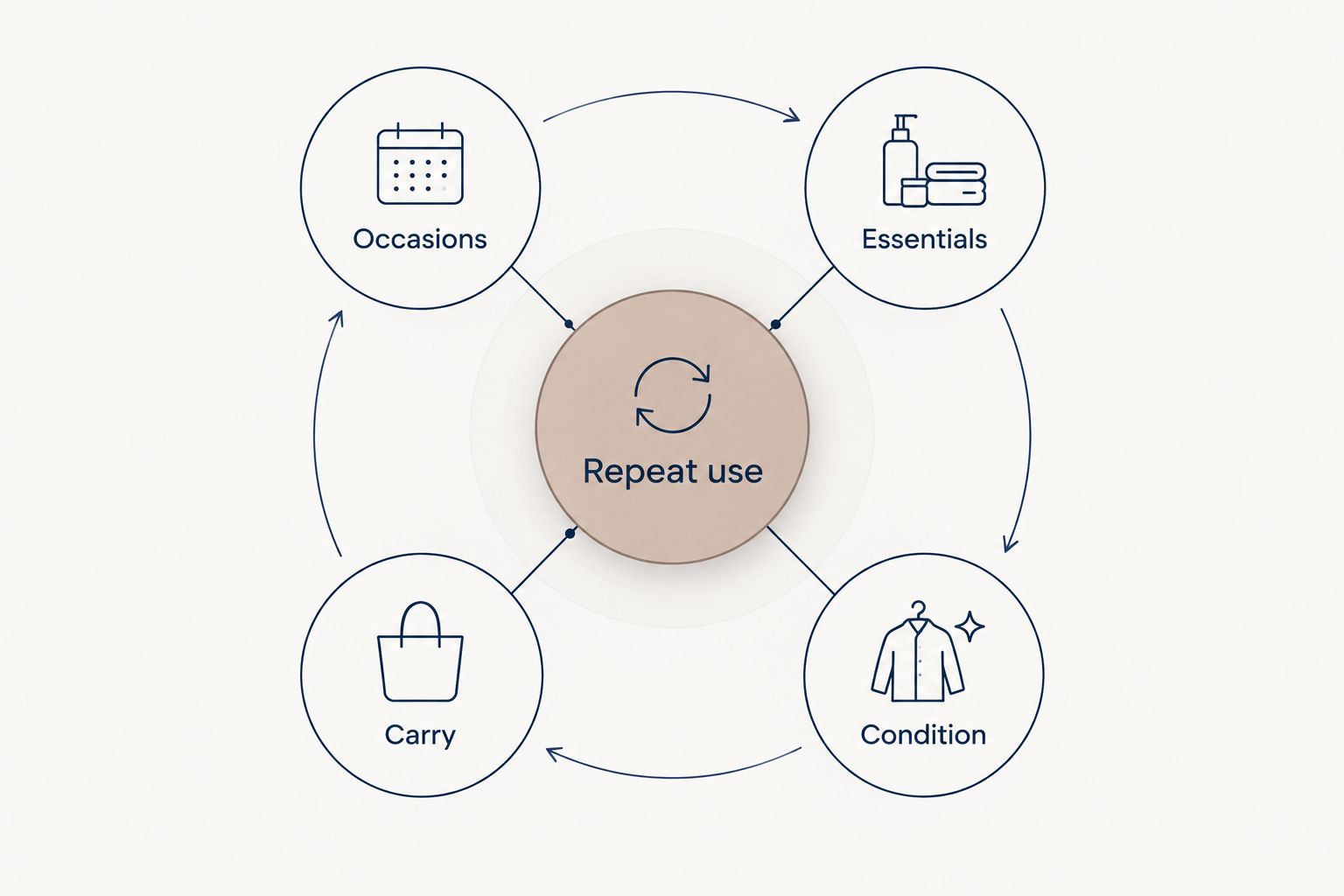
Then compare each candidate with the bag you already reach for. The new purchase needs to solve a different problem, improve a relevant function you can assess, or replace something no longer suitable.
The product cards below identify the catalogue options discussed, not a measured cost-per-wear league table.
A closed bag and a usable bag are not necessarily the same thing. Pack your phone, keys, wallet and occasion-specific essentials, then assess access with the bag in its intended carrying position.
Use these checks during an appropriate try-on:
For a standing reception, access and carrying balance deserve particular attention. For a seated formal dinner, placement and proportion become part of the brief. Neither occasion makes capacity irrelevant, but neither rewards carrying possessions you do not need.
This is the useful HOPE ROZA Performance Luxury question: How does the bag perform for the woman using it, beyond how it looks?
Performance Luxury joins fashion design, sport-science principles, engineering, measurable wearability, material intelligence and luxury expression. For handbags, the relevant considerations include weight, carrying balance, access, organization, adaptability and product life. A specific performance result still requires specific evidence.
The order prioritises the stated use cases: carrying flexibility first, a structured desk-to-dinner role second, and a quilted shoulder-bag preference third. It uses the supplied catalogue titles and descriptions, not ownership trials or comparative durability testing.
It does not establish which bag has the lowest realised cost per wear. That result belongs to your purchase record, upkeep and completed uses.
For a 2026 decision, choose the relevant use-case winner rather than automatically choosing the first row. If you never want crossbody carrying, Crossly’s additional format is not a reason to place it above Trove in your own shortlist.
Start with Crossly if your real requirement is work-to-evening carrying flexibility. Choose Trove when a structured shoulder bag is the clear brief. Choose ARDOUR when you want quilting and already know shoulder carrying suits your occasions.
If none resolves a specific gap, keep using what works. A purchase deferred for a sound reason is not a failed shopping trip.
For your 2026 review, track the bag you currently choose over 30 days. Note the invitations, meetings and dinners where it falls short. That record gives your next purchase a job before you give it wardrobe space.
Which designer bags in Singapore have the lowest cost per wear?
The lowest cost per wear depends on actual purchase costs, attributable upkeep and recorded use. Crossly, Trove and ARDOUR serve different briefs, so their order in an individual wardrobe depends on the occasions each bag genuinely covers.
Should I include bag repairs in cost per wear?
Yes, include repair spending attributable to the bag if you want an ownership-cost calculation. Keep the method consistent across every bag you compare.
Does a bag need to work for both meetings and weddings?
No, a bag needs to perform its intended role. Combining those occasions is useful only when its appearance, capacity and carrying method genuinely suit both.
Should I subtract expected resale value from the calculation?
Keep expected resale value separate from your main calculation. An estimate is not a realised return, and treating it as recovered money distorts the ownership decision.
Is a black designer bag automatically the most versatile choice?
No, colour alone does not establish versatility. Compare the bag with your actual clothes, essential contents and preferred carrying method.
Does frequent use prove that a handbag is sustainable?
No, frequent use establishes use frequency, not environmental performance. An environmental comparison also needs evidence about materials, production, maintenance, product life and end-of-life options.
Before buying, name the next invitation or professional occasion for which you would choose the bag over everything you already own. Then name another, with a different outfit.
If the answer arrives easily, you have a role to evaluate. If the answer requires inventing an entirely different life, leave the bag and keep the life.
HOPE ROZA: For a Life Worth Dressing For.
Dress Like It Matters.


