15% OFF YOUR FIRST ORDER | COMPLIMENTARY $150 WALLET ON ORDERS OVER $500
15% OFF YOUR FIRST ORDER | COMPLIMENTARY $150 WALLET ON ORDERS OVER $50015% OFF YOUR FIRST ORDER | COMPLIMENTARY $150 WALLET ON ORDERS OVER $500

Corporate event planners’ tote bags are personal work bags chosen to keep essential items accessible while supporting a composed, client-facing appearance. The right tote bags for event planners serve your role during the event, not every possible production emergency: separate what belongs on your shoulder from what belongs at the event desk before choosing a bag.
Betty James — Stylist
A corporate planner’s bag has a different brief from a delegate’s bag. You are not simply arriving, taking a seat and leaving. Your schedule can involve a supplier handover, a speaker briefing, client introductions and a reception where you remain part of the delivery team.
For your 2026 event calendar, start with that sequence rather than a shopping category. A bag that works beside a registration desk does not automatically work while greeting a sponsor with a drink in your other hand.
HOPE ROZA approaches handbags through Performance Luxury: considering carrying balance, access, proportion and useful performance alongside appearance. The editorial position is simple: your personal bag should support the event, not attempt to contain it.
A tote is not a production department with handles.
Start with a note on your phone or a sheet of paper. Divide the event into arrival, preparation, guest-facing delivery and departure, then identify what you personally need during each phase.
This reveals an important distinction: something can be necessary for the event without needing to travel on your shoulder. Spare signage, bulk stationery and supplies for the whole team belong in an agreed operational location, not automatically in your personal tote.
If you move from a conference into a leadership dinner, include that transition in the brief. Decide where any larger work kit will remain, who controls access and what you will carry into the room.
Choose for the role you actually perform, not the most dramatic emergency you can imagine. Your bag should complement your delivery plan rather than compensate for an undefined one.
Use the bag you already own for a packing rehearsal. Lay out its contents and sort them into three groups: carry, stage at the venue and remove. Do this before measuring a replacement.
The exercise prevents a familiar mistake: buying additional capacity to preserve an accumulation problem. A spare item earns its place when you can explain its purpose, not simply because it once accompanied you to another event.
For a 2026 conference or awards programme, make your list specific to that booking. A printed programme is useful only if you need it. A tablet belongs in the bag only if your workflow requires it and the bag can accommodate it appropriately.
Capacity should follow an edited inventory. It should not become an invitation to add everything the opening will accept.
An empty-bag assessment answers an incomplete question. Put your intended contents inside, wear your event jacket and check how the bag sits when you stand, turn, reach and move through a doorway.
Use a kitchen scale to compare the bag empty and packed. Record your own readings in grams; do not rely on an unverified description such as lightweight. This is a comparison of your actual load, not a universal safe-carrying threshold.
The ARDOUR Quilted Leather Shoulder Bag (Black) is a tote-style option to consider for a polished personal carry. Its catalogue identifies quilted leather construction, but does not establish a measured weight, device capacity or tested load limit. Those details need checking before it becomes your working event bag.
Treat comfort, capacity and load tolerance as separate questions. A bag can satisfy one without satisfying the others.
Give yourself a 5-minute rehearsal before choosing a bag. This is a suggested practical check, not a validated performance test. Retrieve your phone, credential and keys, then return them to their intended places without emptying the bag onto a table.
Repeat the exercise while wearing the jacket you expect to use. Check whether the opening remains manageable when the bag is packed, rather than only when it is displayed empty.
Security and convenience need separate inspection. A roomy opening does not establish secure storage; a closure does not establish easy access. Confirm the actual closure, internal layout and any pockets on the specific product you are considering.
For your 2026 events, decide where confidential documents will sit and how you will prevent them from being mixed with items you retrieve frequently. Do not assume an additional organiser solves this until you test the resulting fit.
Consider two carrying arrangements before purchasing: one edited tote throughout, or a work tote left securely backstage while a smaller personal bag accompanies you into the reception. Neither arrangement wins automatically. Your responsibilities determine the answer.
A single tote avoids transferring essentials between bags. Its limitation is that you continue carrying the work load during the guest-facing phase. A separate evening arrangement reduces what accompanies you, but introduces a handover and storage requirement.
Make the decision using a simple sequence: Work kit, Secure storage, Personal carry. If you cannot identify secure storage, a two-bag plan is unfinished rather than clever.
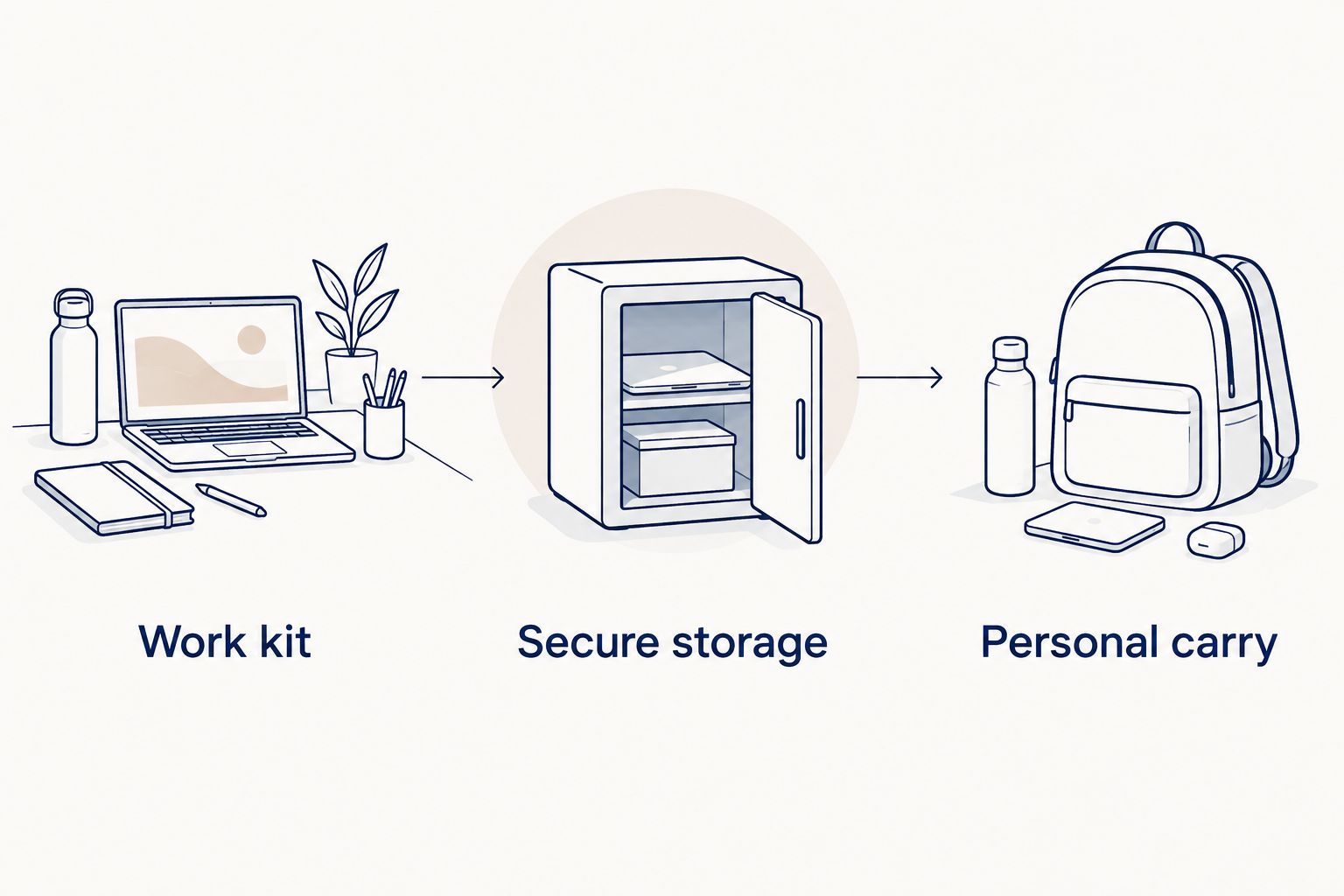
Review your existing wardrobe before adding another bag. Identify which client meetings, conferences and dinners the proposed purchase would genuinely serve, and whether it replaces a weak point or duplicates an option that already works.
For your 2026 shortlist, compare appearance with the same functional checklist every time. A quilted surface or a particular colour can support your outfit, but neither proves carrying comfort, durability or useful organisation.
The ARDOUR Quilted Leather Shoulder Bag (Burgundy) offers another colour direction within the same tote-style family. Choose between the colour options through your wardrobe and intended occasions, not an unsupported assumption that one performs differently.
HOPE ROZA Performance Luxury asks you to consider useful performance alongside luxury expression. That is a decision framework, not evidence that a particular bag carries a laptop, resists rain or meets an unlisted weight specification.
For corporate events in 2026, compare options on load, access, security and the transition into the guest-facing room. The table describes intended roles and limitations, not product testing or measured carrying performance.
| Option | Best for | Practical advantage | Key limitation |
|---|---|---|---|
| One edited personal tote | Planners who retain the same essentials throughout delivery | Avoids transferring contents between bags | Keeps the full personal work load with you during the reception |
| Tote plus a smaller evening bag | Planners with a clear handover into a client-facing evening | Separates work supplies from the reception carry | Requires secure storage and a deliberate transfer |
| Venue-staged operational kit plus personal bag | Planners working from an agreed event base | Keeps shared supplies separate from personal possessions | Depends on access arrangements and team coordination |
| ARDOUR Quilted Leather Shoulder Bag (Black) | A planner considering a black quilted leather tote-style personal bag | Offers a polished option to assess against an edited inventory | Measured weight, device fit and closure details need confirmation |
| ARDOUR Quilted Leather Shoulder Bag (Burgundy) | A planner whose event wardrobe suits burgundy quilted leather | Provides a colour alternative within the tote-style shortlist | Colour does not establish a different capacity or performance result |
The two ARDOUR options belong on a shortlist for personal event carry, not an equipment specification. Compare the actual products against your packed inventory before deciding.
When colleagues add their own supplies, your carefully edited bag becomes an informal team cupboard. Establish a shared kit location and keep your personal carry accountable to your own responsibilities.
A screen measurement does not establish whether a device and its sleeve fit through a bag’s opening. Check the complete device dimensions, usable interior and closure clearance. Never infer laptop compatibility from the word tote.
Try the packed bag with your jacket, jewellery and event clothing. A handle that works with a sleeveless dress needs checking again over tailoring. Assess how you carry it while greeting someone, not just while facing a mirror.
Leather construction alone does not establish resistance to rain or spills. Follow the specific care guidance and make a covered arrival plan where needed. The event already has a contingency document; your handbag need not become its experimental section.
Frequent use helps you assess personal value. It does not, by itself, prove a lower environmental impact. Material sourcing, production, repair and end-of-life information require their own evidence.
Are tote bags for event planners the same as delegate gift bags?
No. A planner’s personal tote supports her working role, while a delegate gift bag is part of the attendee experience. Write a separate brief for each rather than trying to solve both decisions with one category.
Should I choose a black or burgundy event tote?
Choose the colour that works with your existing event wardrobe. Compare it against your jackets, dresses and shoes in the lighting available to you; colour alone does not establish functional performance.
Can I use an organiser inside an event tote?
Use an organiser only after checking the packed result. It takes up interior space, so confirm that essentials remain accessible and that the bag still closes as intended.
Does a corporate event tote need to carry my laptop?
Only if your role requires the laptop to remain with you. Otherwise, consider whether an agreed secure location lets you keep the personal bag smaller; confirm device fit separately when carrying it is necessary.
What should I check if I cannot try the bag in person?
Request usable interior dimensions, opening measurements, closure details and empty weight. Compare those details with your actual contents and check the current return policy before ordering.
Can I leave my work tote at the registration desk during dinner?
Leave it there only when the venue and your team have agreed on secure storage and access. An unattended desk is not a storage plan, especially when the bag contains personal items or confidential documents.
How do I compare value after buying an event bag?
Record the occasions on which you actually use it and any care or repair it needs. Assess whether its access, carrying arrangement and appearance continue to serve your work rather than judging value from the purchase alone.
Before your next event, ask someone to hand you a programme while you are carrying your packed bag and holding your phone. Notice what you have to put down, tuck away or rearrange. That small rehearsal exposes an unfinished carrying plan faster than another photograph of an empty interior.
HOPE ROZA: For a Life Worth Dressing For.
Dress Like It Matters. Pack as though the work matters, too.


