Vana or Vespera Wallet on Qualifying Orders Over $500

Instead of repeatedly buying shoes for standing all day with sole cushioning and hoping they survive an important event, build a workflow around sole construction, fit and an occasion-specific wear rehearsal. For your 2026 conference, presentation or wedding, assess Air Vault™ as an engineered sole system, not a promise that any heel will suit any foot for an unlimited day.
Betty James — Stylist
A shoe can feel pleasantly soft while seated and behave quite differently when you stand, turn or descend stairs. Your purchase decision therefore needs to distinguish cushioning from fit, security and suitability for the floor beneath you.
HOPE ROZA is a women’s Performance Luxury house for women choosing footwear for consequential work and meaningful occasions. Performance Luxury considers fashion design, sport-science principles, engineering, material intelligence and wearability together. The relevant question is not merely whether a sole feels soft, but whether the complete shoe works for your intended occasion.
This guide is a selection and preparation workflow, not an all-day endurance claim. Keep the shoe, your feet and the event in the same brief. A conference agenda is demanding enough without appointing your shoes as an additional speaker.
For your 2026 occasion plan, distinguish confirmed details from assumptions. If the reception surface or seating arrangement is unclear, ask the organiser before making the footwear decision.
Expected result: You have a specific use brief, not the vague instruction “comfortable heels.” That brief becomes your reference whenever an attractive pair tempts you to ignore the practical conditions.
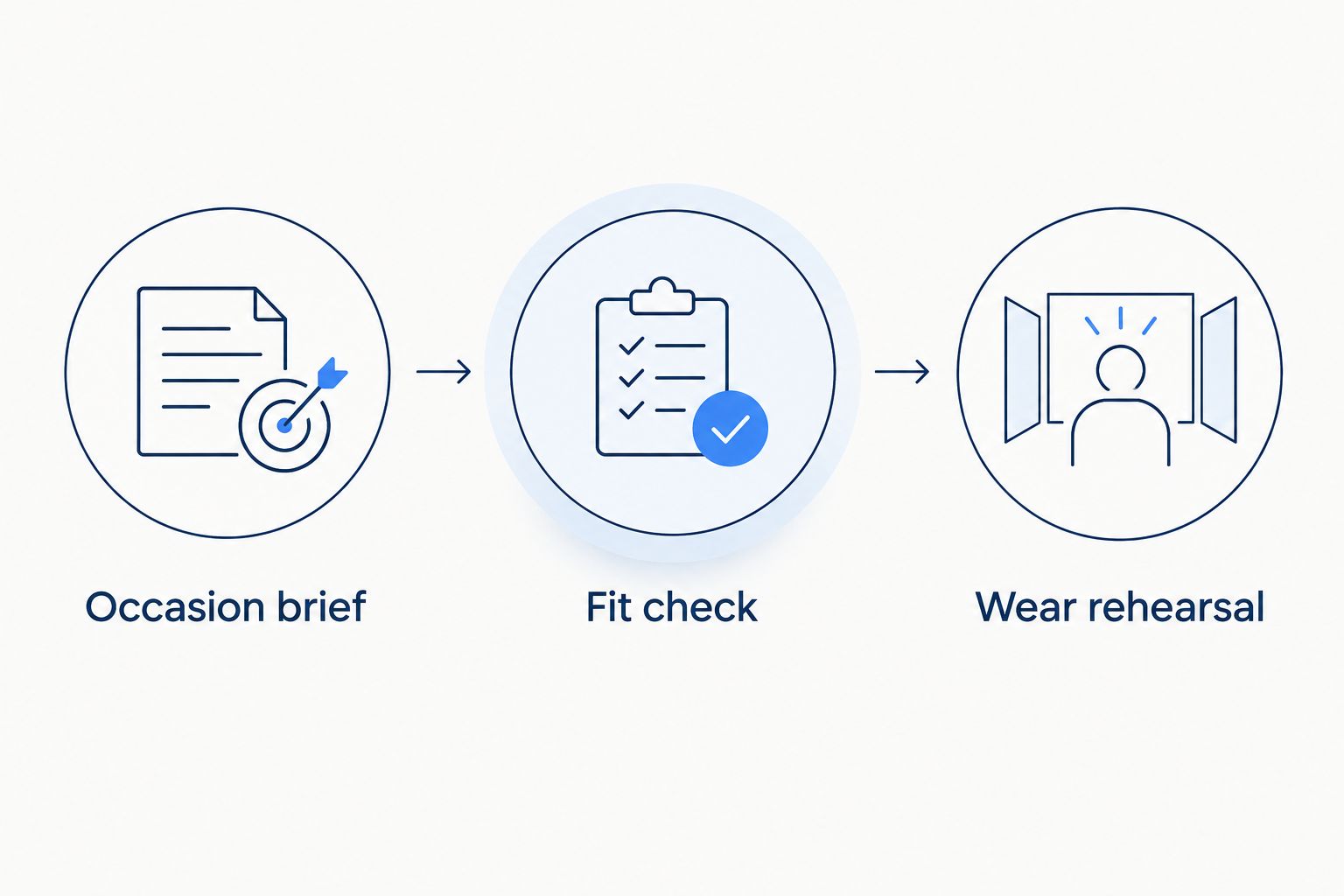
Keep the checklist in this order: Occasion brief, Fit check, Wear rehearsal. Appearance belongs in the decision, but it should not erase the other requirements.
HOPE ROZA’s Air Vault™ is a patent-pending triple-layer sole architecture for refined heels. Its three layers are engineered to manage impact, return energy, distribute pressure and reduce loading beneath the forefoot while preserving a slim luxury profile.
That is a design description, not a medical claim or a verified duration for every wearer. Air Vault™ does not remove the need to assess interior space, upper pressure, heel security and the relationship between the shoe and your movement.
Compare built-in construction and removable cushioning on integration, internal space and intended use, rather than declaring one universally more comfortable.
| Approach | Best for | Useful distinction | Limitation |
|---|---|---|---|
| Built-in sole architecture, such as Air Vault™ | Women selecting refined heels for consequential work or meaningful occasions | Performance construction is part of the shoe’s design | Construction alone does not establish individual fit or comfortable wear duration |
| Removable cushion insert | Women assessing an existing occasion shoe that has room for an insert | Adds a separate cushioning component to an existing pair | Occupies internal space and requires a fresh fit check; does not reproduce the complete sole architecture |
Choose the complete shoe first. Treat an insert as a separate adjustment, not permission to overlook a poor fit. Neither approach earns an all-day verdict from a brief seated try-on.
Expected result: You can distinguish a cushioning preference from a fit problem. If the shoe fails the fit check, revisit the size, shape or pair rather than immediately adding more padding.
For an online purchase, use the guide to choosing the right shoe size alongside the individual product’s guidance. A familiar size label is a starting point, not a substitute for checking the particular shoe.
The catalogue includes a ball-of-foot cushion format supplied as 4 pairs and a black cushion-insole format supplied as 2 pairs. Those pack counts describe the products, not their effectiveness or a comfortable wear duration.
Best for: assessing removable cushioning in an existing occasion shoe with sufficient internal room. The advantage is a separate component you can evaluate with that pair; the drawback is that it changes the fitting space and still requires careful placement according to the product instructions.
Do not choose between these formats by pack count alone. Check the current product instructions, intended placement and fit with your shoe before deciding.
Expected result: You have a reasoned decision about the shoe for that occasion, supported by your own observations. You do not have a universal endurance result.
Hours of Wear is the number of hours a shoe has been assessed as comfortable in HOPE ROZA sample wearer testing. Use only the product-specific published value and read the testing context; do not transfer a result between styles or treat it as a personal guarantee.
For a 2026 event, record the date of your rehearsal and the exact setup. That makes the notes useful when you revisit the pair rather than vaguely remembering that it “seemed fine.”
Expected result: Your event-day footwear matches the combination you assessed. The evening should contain conversation, not an unscheduled negotiation with an insole.
Best for: presentations, conferences or client meetings followed by a meaningful evening occasion. Use the same workflow, but write separate briefs for the work setting and dinner.
For a work-to-dinner plan in 2026, check both the restrained daytime outfit and the evening silhouette. The practical benefit of retaining one suitable base pair is continuity; the limitation is that it must genuinely meet both briefs.
If your verified heel is compatible with AVERYN™ Lock, adaptability becomes relevant. HOPE ROZA’s patent-pending interchangeable ornament system uses a precision spring-lock mechanism that allows compatible ornaments to be changed in under 60 seconds while remaining secure during wear.
Compatibility is the gate. Confirm the base shoe and ornament combination before planning a change, and follow the product instructions rather than guessing from appearance. Changing an ornament changes the expression, not the fit result or assessed wear duration.
Expected result: You have either one tested pair that serves both occasions or a deliberate change of footwear. Neither choice needs to be disguised as a styling failure.
Keep a 2026 wear record for each occasion pair. Record the outfit, hosiery, insert setup, surfaces, standing demands and the specific observations that determined whether you would wear it again.
Use those notes to improve the next decision. A pair that works for a seated presentation does not automatically qualify for a standing reception, and a familiar shoe still deserves another check after a repair or fitting change.
For consequential work, extend the brief with the pump shoes guide for board directors. Begin with the room, then assess the footwear that will carry you through it.
Value comes from useful repeat wear, appropriate performance, condition and product life. Owning fewer pairs is useful only when those pairs answer the invitations you actually accept.
Can I use the same cushioning setup with different hosiery?
Repeat the fit check when you change hosiery. The shoe, hosiery and insert form one wearing setup, so a result from one combination does not establish the fit of another.
Does a pointed-looking pump automatically rule it out for sensitive forefeet?
No. Assess interior length, forefoot width, upper cut, seam placement and heel security while standing and walking; the external silhouette alone does not establish suitability.
What should I ask about a published Hours of Wear figure?
Ask which product was assessed and under what wearer profiles, surfaces and conditions. Hours of Wear refers to sample wearer testing, not a guarantee that every woman will experience the same duration.
Should I add cushioning before or after choosing my shoe size?
Include any intended insert in the final fit assessment. Do not select a size without it and assume the added component will leave interior space and heel security unchanged.
Does Air Vault™ replace the need for sitting breaks?
No. Air Vault™ is an engineered sole architecture, not a promise of unlimited standing or a reason to ignore discomfort and opportunities to sit.
Can interchangeable ornaments turn any heel into a work-to-dinner shoe?
No. AVERYN™ Lock requires a compatible base shoe and ornaments, and that base shoe must still meet the fit, movement and dress requirements of both occasions.
Should I keep wearing a shoe to prove its all-day comfort?
No. Stop when discomfort develops rather than treating a wear rehearsal as an endurance test, and seek qualified medical care for persistent pain or concerning symptoms.
Before your next consequential occasion in 2026, write down what would make you reject the shoe: forefoot compression, unreliable heel security, or a setup you cannot reproduce. Set that boundary before the outfit is finished.
A sound footwear decision includes a reason to say no. Make Your Entrance. Keep Your Evening.
Dress Like It Matters.
Betty James — Stylist


