15% OFF YOUR FIRST ORDER | COMPLIMENTARY $150 WALLET ON ORDERS OVER $500
15% OFF YOUR FIRST ORDER | COMPLIMENTARY $150 WALLET ON ORDERS OVER $50015% OFF YOUR FIRST ORDER | COMPLIMENTARY $150 WALLET ON ORDERS OVER $500

Yes, wedge sandals for a formal wedding can work when the design is refined, the outfit meets the dress code, and the venue makes a broader sole useful. Choose a discreetly finished wedge rather than a rope-covered holiday style. For strict black tie, confirm the host’s expectations: practical footwear still needs to belong with the clothes and the occasion.
Betty James — Stylist
Yes, but judge the whole shoe, not just the heel category. A restrained wedge beneath a fluid evening dress makes a different proposition from a chunky platform beneath the same dress. Both add height; they do not communicate the same level of formality.
For your 2026 wedding calendar, use this comparison as a styling framework, not a performance ranking. The advantages depend on the individual shoe, its fit and the surface beneath it.
| Footwear option | Best for | Styling advantage | Limitation to check |
|---|---|---|---|
| Refined, covered wedge sandal | Formal garden weddings with mixed indoor and outdoor settings | Creates a continuous line beneath a long dress | A substantial sole can look heavy beneath delicate fabric |
| Rope or cork-look wedge sandal | Weddings explicitly described as relaxed or informal | Complements a deliberately casual summer outfit | Visible holiday references can conflict with formal evening clothes |
| Block-heel occasion sandal | Outdoor occasions requiring a distinct dress-shoe silhouette | Separates the heel visually from the forefoot | Heel width alone does not establish grip or secure fit |
| Kitten-heel pump or slingback | Indoor dinners and formal settings with firm floors | Offers a fine, contained silhouette | A narrow contact point needs particular attention on soft ground |
| Embellished occasion sandal without a raised heel | Hosts and dress codes that welcome lower footwear | Adds ornament without relying on height | Open-backed designs require an individual security check |
If dancing is central to the evening, choosing wedding shoes you can dance in deserves its own decision rather than an assumption based on the heel shape.
A summer wedding is a season and an occasion, not a single dress code. A daytime garden ceremony followed by a restaurant dinner presents a different brief from an evening ballroom reception, even when both invitations say formal.
Separate permission from suitability. The host determines what belongs at the celebration; you determine whether the shoe fits, works with your outfit and suits the route through the venue.
The useful question is not whether wedges are inherently formal. It is whether this particular pair looks intentional with this particular outfit, and whether you can move naturally in it.
A lawn is a surface, not a dress code. It does not automatically turn the reception into a resort lunch.
Start with the side view. The wedge occupies more visual space than a separate heel, so its finish becomes part of the outfit rather than a detail hidden beneath your foot.
For a formal wedding, favour a neat, covered wedge with a finish that belongs alongside your dress. Exposed rope, strongly rustic texture and conspicuous platform construction introduce a more relaxed reference. That is a styling distinction, not a judgment about workmanship.
Inspect the join between the upper and sole. Visible damage, lifting edges or a tired finish will undermine the outfit regardless of the original design.
A fine-strapped dress and a broad wedge create contrast. Decide whether that contrast looks deliberate or whether the shoe dominates the outfit.
With a floor-length dress, check the hem while wearing the actual shoes. With a shorter dress, examine the full silhouette because the entire wedge remains visible. Neither length automatically approves or excludes the shoe.
Metallic colour, restrained crystal detail or a sculpted upper can connect a sandal to evening dressing. None compensates for a fundamentally casual sole.
Choose where you want the eye to land. If the dress already carries strong embellishment, the shoe need not submit a competing proposal.
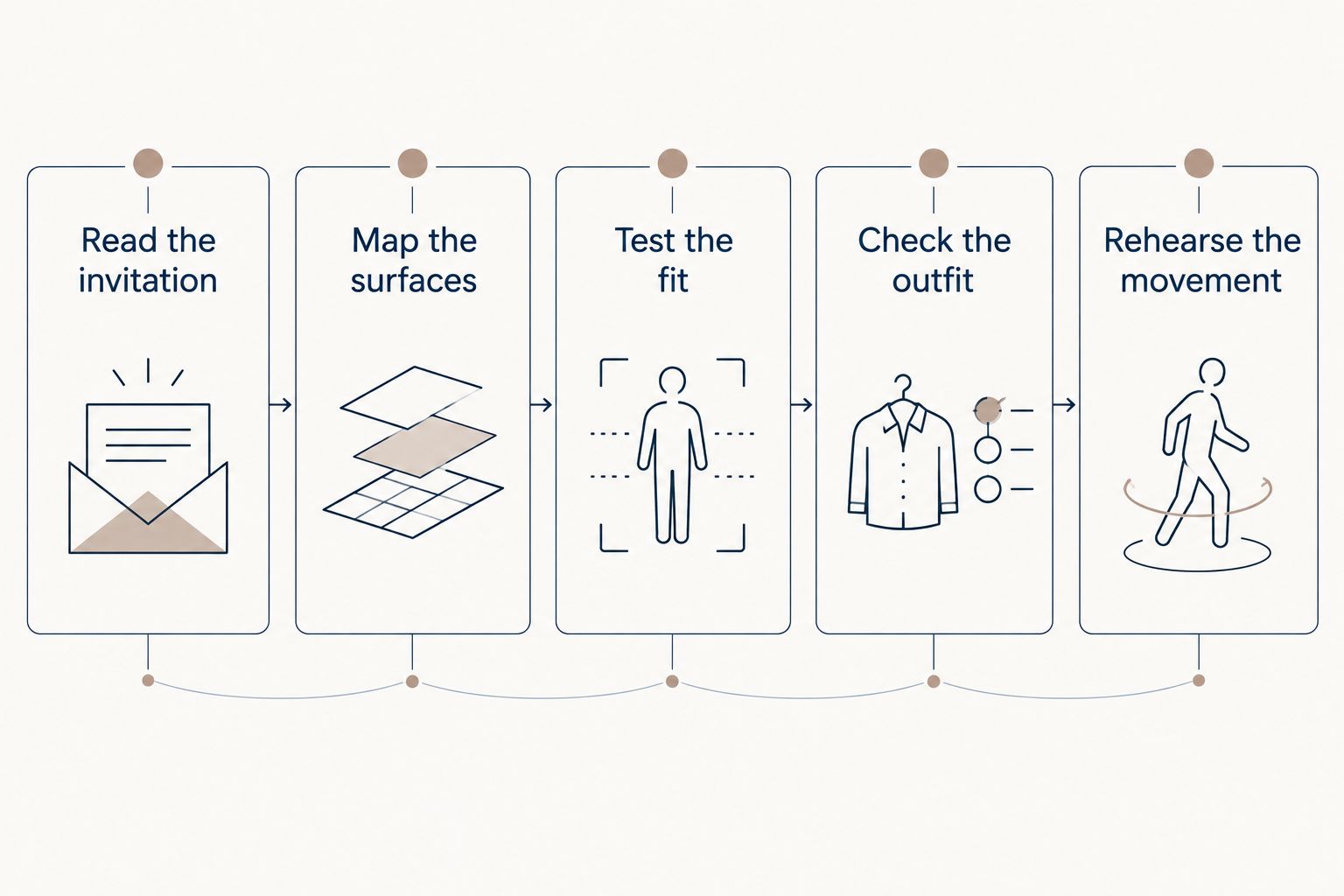
The same wedge sandal can make sense for one wedding and feel disconnected at another. Use these factors to explain the difference:
These are purchase criteria for 2026 occasion dressing, not reasons to buy a new pair automatically. Begin with the shoes you already own and identify the actual gap.
Follow the event from arrival to departure. A shoe that works only for the ceremony has solved only part of the brief.
Identify the stated dress code before interpreting the location. A garden venue does not cancel a formal request, and a hotel address does not establish black tie.
If you need clarification, ask a precise question: does the reception call for full evening dress, or is a formal summer outfit appropriate? That produces a more useful answer than asking whether wedges are allowed in isolation.
Ask how guests reach the ceremony, where drinks take place and whether dinner and dancing move indoors. Consider the connecting paths as well as the photographed setting.
A wedge spreads contact over a different shape from a separate heel, but that does not certify it for wet grass, loose stones or a slippery floor. Inspect the outsole and assess the actual conditions.
Stand and walk in both shoes. Check whether your heel stays positioned, your toes remain within the footbed and the upper holds your foot without forcing you to grip with your toes.
Turn, pause and use a step where safe. Reject a pair that slides, pinches or requires constant correction rather than assuming the wedding will improve the fit.
Wear the full combination, including the bag. Examine it from the front and side, then walk so you can see the hem in motion.
A long dress should not require you to lift it continuously to avoid the shoe. Check alterations with the intended footwear rather than choosing the shoes after the hem is finished.
Practise the movements the occasion involves: sitting, standing, walking, turning and a few dance steps. This is a practical screening exercise, not proof of comfort for a particular duration.
Record what you notice. “The strap slips when I turn” is actionable; “probably fine” is not a fit assessment.
For a formal wedding dinner in 2026, build the outfit around the invitation first and the wedge second. Making a casual shoe the fixed point can leave every other accessory working unnecessarily hard.
With a fluid long dress, assess whether the wedge disappears into the line or interrupts it. A tonal relationship between shoe and hem can keep the transition quiet; a contrasting colour makes the footwear more prominent.
With a tailored midi dress, inspect the side profile carefully. The wedge becomes an exposed part of the composition, so its shape and finish deserve the same attention as the neckline or sleeve.
When considering wedding dinner dresses, assess hem movement and fabric character alongside footwear: a light skirt and a visually substantial sole need deliberate balance. Choose the combination together rather than approving each item separately.
Keep the bag occasion-specific. It should accommodate your essential items, close properly and remain manageable during greetings and drinks. Test it packed, not empty.
Finally, coordinate rather than matching everything literally. A shared tone, metal finish or degree of ornament can connect the accessories without making them identical.
HOPE ROZA is for women choosing Performance Luxury footwear for consequential work and meaningful occasions. The relevant principle is straightforward: appearance matters, but so does what happens after you arrive.
Performance Luxury combines fashion design, sport-science principles, engineering, measurable wearability, material intelligence and luxury expression. For this decision, it means examining pressure management, impact management, fit, stability and useful repeat wear rather than treating a heel category as a comfort guarantee.
Air Vault™ is HOPE ROZA’s patent-pending triple-layer sole architecture for refined heels. It is engineered to manage impact, return energy, distribute pressure and reduce loading beneath the forefoot while preserving a slim luxury profile. That describes its design purpose, not a medical benefit or a promise about your personal wearing time.
Do not assume a wedge contains this architecture, or transfer the claim to an unrelated sandal. Look for product-specific evidence whenever a shoe makes a performance claim.
You can explore HOPE ROZA with that distinction in mind: category language explains a design approach; the individual product must explain what it contains. Neither engineering nor ornament rescues an unsuitable fit.
Wedge sandals are not the default choice for strict black tie. As a styling recommendation, choose footwear with a clear evening character and confirm expectations if you need a wedge for the setting or your individual requirements.
Assess the complete silhouette rather than rejecting every wedge or approving every embellished shoe. A discreet covered design has a different relationship to evening dress from an exposed rope platform.
Wedges are not automatically easier to wear. The continuous sole changes the construction, but the upper, internal shape, heel elevation, flexibility, outsole and your individual fit still matter.
Apply the same standing-and-walking check to wedges that you would apply to any occasion shoe. Stop wearing shoes that cause pain; persistent pain, swelling, numbness, skin damage or walking difficulty warrants medical assessment.
You can wear the same shoes when they suit both settings. Check the most demanding surface, the reception dress code and the movements expected throughout the occasion before committing.
For 2026 purchases, repeat usefulness is a stronger value question than whether the shoe photographs well once. Identify other meaningful occasions where the pair genuinely belongs, without counting imaginary invitations.
Can I wear wedge sandals if the wedding invitation says formal?
Yes, refined wedge sandals can fit a formal wedding outfit when their finish and proportions suit the invitation. Confirm the host’s expectations if formal could mean full evening dress.
Do wedge sandals have to be metallic for a wedding?
No, wedge sandals do not have to be metallic. A restrained colour and considered finish can work; assess the relationship with the dress rather than treating shine as proof of formality.
Can I wear black wedge sandals to a summer wedding?
Yes, black wedge sandals can belong in a summer wedding outfit. Check the dress code, the shoe’s construction and the overall composition rather than excluding a colour because of the season.
Should my wedding bag match my wedge sandals exactly?
No, your wedding bag does not need to match your wedge sandals exactly. Connect them through tone, finish or the degree of ornament while checking that the bag works with your actual essentials inside.
Is a platform wedge the same as a formal wedge?
No, a platform describes elevation beneath the forefoot, not formality. Judge the entire shoe’s proportions, surface finish and relationship to evening clothing.
Should I buy wedges just because the ceremony is outdoors?
No, an outdoor ceremony alone is not a reason to buy wedges. Establish the ground conditions and assess suitable shoes you already own before purchasing another pair.
Before buying, ask the venue where guests actually walk. A photograph of the lawn tells you little about the gravel path, steps or polished reception floor between the ceremony and dinner.
The right shoe solves the route as well as the outfit. Dress Like It Matters.
Betty James — Stylist


