15% OFF YOUR FIRST ORDER | COMPLIMENTARY $150 WALLET ON ORDERS OVER $500
15% OFF YOUR FIRST ORDER | COMPLIMENTARY $150 WALLET ON ORDERS OVER $50015% OFF YOUR FIRST ORDER | COMPLIMENTARY $150 WALLET ON ORDERS OVER $500

Replace your everyday tote when damage compromises its handles, base or closure, when a qualified repairer cannot restore dependable use, or when its size and carrying arrangement no longer suit your working life. Age alone is not a reason. Before buying, separate cosmetic wear from structural failure, then test the bag with the essentials you actually take to meetings.
Betty James — Stylist
Replace the tote when it can no longer carry your necessary belongings dependably, and repair or a different packing arrangement will not resolve the problem. For a client meeting, conference or leadership dinner, dependable means more than looking presentable: you need secure contents, usable handles and access without unpacking your working life onto the table.
Start your 2026 bag audit with the decision below. If condition is the concern, the guide to how to spot quality leather in a handbag provides a useful companion to the inspection.
| Decision | Best for | What supports the decision | Benefit | Limitation |
|---|---|---|---|---|
| Keep | A sound tote that still serves your work | Secure attachments, intact base, usable access and acceptable condition | Preserves a useful possession | Does not resolve a genuine mismatch in size or carrying comfort |
| Repair | A localised fault with sound surrounding material | A repairer can explain the proposed repair and its limits | Retains a bag you already know | Repair cannot automatically correct unsuitable proportions or carrying design |
| Adapt | A sound tote with a packing or occasion problem | Removing unnecessary contents or changing its role resolves the difficulty | Avoids replacing a functional bag | An organiser or accessory can introduce extra bulk and weight |
| Replace | Structural failure or an unresolved functional mismatch | The bag cannot meet your essential requirements after assessment | Lets you correct a clearly defined problem | A new bag repeats the mistake if you buy without a carrying brief |
A work tote is part of your preparation. You notice its performance when you retrieve your notes before a presentation, find your phone after a conference session or carry it into dinner without rearranging everything at the door.
The useful question is not whether the bag still looks new. It is whether its condition and function remain appropriate to the rooms you enter.
A softened silhouette is not automatically a defect. Equally, an immaculate exterior does not excuse a handle you distrust or a closure you cannot use with the bag properly packed. Judge appearance and function separately before making the purchase decision.
Empty the tote and examine it in good light. Look at both sides of each attachment rather than inspecting only the visible exterior, and do not load-test a handle that is already separating.
Check where handles meet the body. Look for separating stitches, material tearing around the attachment, exposed reinforcement or movement that was not previously there.
A loose thread and a handle pulling away from the body are different problems. Ask a repairer whether the surrounding material can support a repair, not simply whether the thread can be replaced.
If you no longer trust an attachment, stop using the tote for important contents until it has been assessed. A meeting agenda should not include collecting your belongings from the pavement.
Inspect the underside, corners and seams joining the base to the body. Distinguish surface scuffing from an opening, thinning area or tear that exposes the interior.
Then consider shape. A relaxed base is acceptable if the bag was intended to sit that way and still works for you; a base that leaves essential documents folded or contents difficult to retrieve creates a functional problem.
Operate the closure with the bag empty, then with your necessary contents inside, provided the structure is sound. Check for snagging, separation, misalignment or an opening that remains under tension.
Examine the lining for loose sections that catch belongings or create inaccessible pockets. A lining fault warrants a repair assessment; it does not, by itself, prove the entire bag needs replacing.
For your 2026 wardrobe review, examine the tote against its actual assignment: consequential work and the occasions that follow it. Use these 4 checks to turn a vague feeling of dissatisfaction into a specific decision.
These are decision checks, not a laboratory test or a published durability score. Their purpose is to identify the problem you need a repair or replacement to solve.
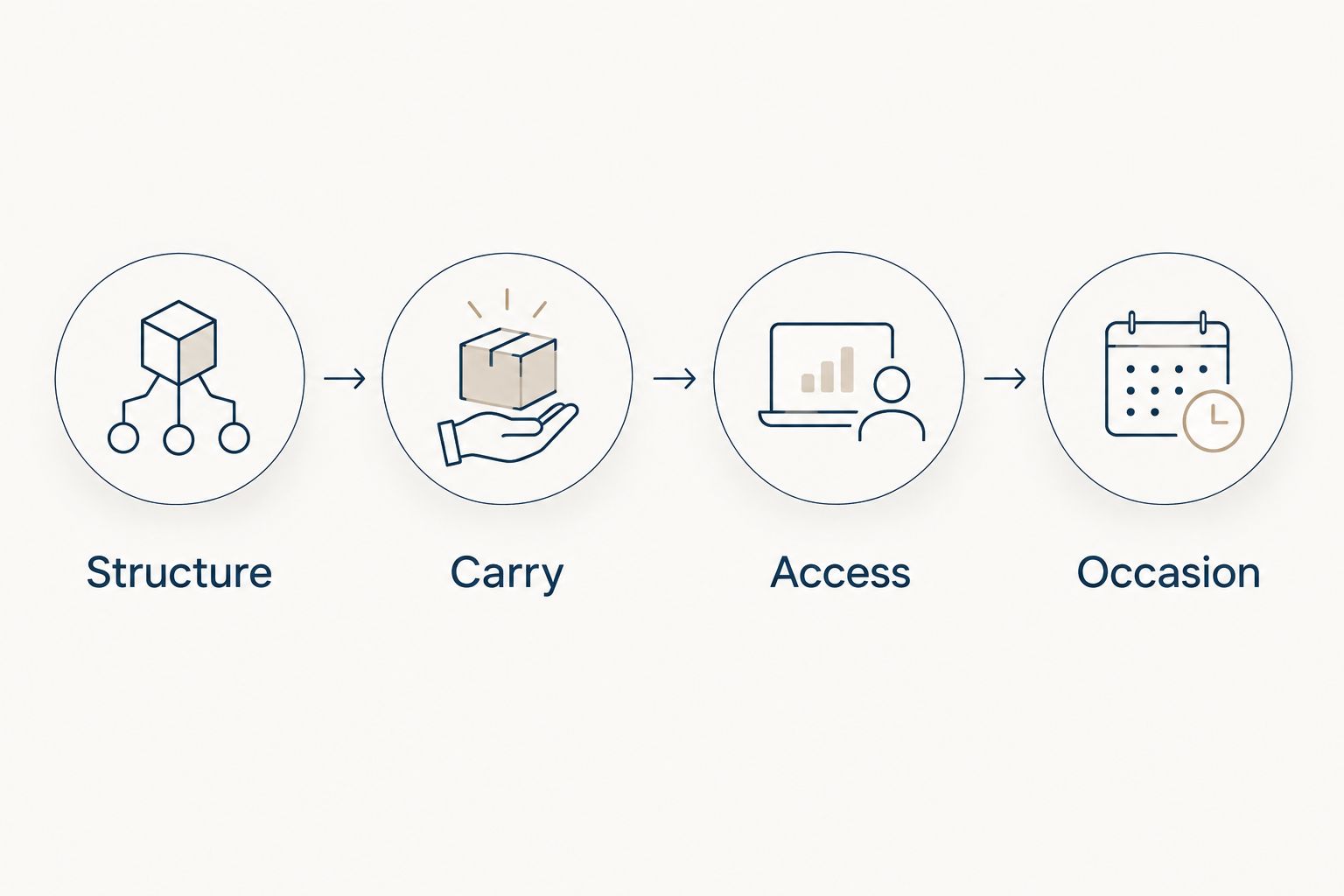
Keep the result in plain language. ‘The opening makes retrieving my notes awkward’ is a purchasing criterion; ‘I need something nicer’ is not yet a useful brief.
Choose repair when a specific intervention can restore a bag you still want to use. Ask the repairer to inspect the whole area around the fault and explain what the finished result will and will not achieve.
Before authorising work, ask 3 questions:
A repaired handle does not make a too-small opening larger. Recolouring does not change how a bag sits against your body, and replacing a closure does not remove the need to overfill it.
Assess the repair against future use rather than the original purchase alone. If you still choose the tote willingly for meetings and events, restoration has a clear purpose; if you have stopped using it because the design never suited you, repair needs a different justification.
There is no defensible universal replacement date for every tote. For a 2026 assessment, focus on these observable differences rather than assigning an expiry date to a category.
Before replacing a sound bag, lay out everything you carry and divide it into 3 groups: essential for the occasion, useful for that particular day and present through habit. Return the first group, then add only what the day's plan requires.
Do not edit out something genuinely necessary merely to make an unsuitable bag appear adequate. Instead, use the exercise to establish the capacity you need.
If the tote now closes properly and its contents are accessible, packing was part of the problem. If necessary belongings still crowd the opening or make the carrying arrangement unsuitable, you have evidence for a different bag brief.
Apply the same discipline to organisers. Use one when it resolves a defined access problem, but assess the complete packed bag afterwards; an organiser is not an automatic improvement simply because it contains compartments.
Write a replacement brief before browsing. Name the occasion, necessary contents, carrying arrangement, access requirements and acceptable maintenance, then distinguish requirements from preferences.
For example, a consultant moving from a client presentation to dinner needs a bag that serves both settings with her actual belongings inside. That is a different requirement from choosing the largest tote that looks plausible beside a tailored jacket.
Use this checklist when considering a candidate:
Buy against the failed requirement, not against the excitement of replacement. A different colour is a styling change; it is not evidence that the functional problem has been solved.
HOPE ROZA is a women’s Performance Luxury house creating footwear, handbags and accessories for consequential work and meaningful occasions. Performance Luxury combines fashion design, engineering, material intelligence and measurable functional benefits, considering the woman's experience as well as the object's appearance.
HOPE ROZA Performance Luxury is for women choosing handbags around consequential work and meaningful occasions, not appearance alone. For this decision, that means examining carrying balance, access, security, useful capacity and product life before treating a logo or finish as sufficient evidence of value.
The principle has limits: a category position does not establish any individual bag's weight, capacity, repairability or performance. Check those details at product level, and do not assume a shoulder bag is a tote or a compact bag can replace the capacity your work requires.
For a 2026 purchase decision, compare the work a bag will actually do with the effort and expense of keeping it useful. Consider purchase, necessary maintenance, repair and repeated use together, without assuming either a high price or a low price proves value.
Cost per meaningful use is a useful retrospective calculation: divide what you have spent on the bag and its care by the occasions on which you used it. A forecast is less certain, so keep hoped-for use separate from recorded use.
Product longevity also requires more than continued ownership. A tote stored indefinitely has not necessarily remained useful, and replacing a bag is not automatically an environmental improvement. Avoid calling either choice sustainable without evidence about the wider product life.
Can I keep using a tote while a handle is coming loose?
Stop using a tote with a separating handle until a repairer has assessed it. Moving your necessary belongings to another sound bag avoids relying on the damaged attachment.
Does peeling mean my tote is beyond repair?
Peeling requires an assessment of the affected material and finish before you decide. Do not assume a conditioner or polish will restore a damaged surface, and do not apply a treatment without checking suitability.
Should I replace my tote because it looks too casual for meetings?
Change its role if the tote no longer meets the presentation standard you want for those meetings. That is an occasion decision, not proof that a sound bag has reached the end of its useful life.
Can a shoulder bag replace my work tote?
A shoulder bag can replace your work tote only if it meets your verified capacity, access and carrying requirements. Do not infer document or device fit from the category name or photographs alone.
What should I ask a repairer before leaving my bag?
Ask what has failed, what the repair will restore and what limitations will remain. Request an explanation of any expected changes to appearance or function before authorising the work.
What can I do with a sound tote I no longer need?
Consider a genuine alternative role, resale or passing it to someone who wants it, with its condition disclosed. Avoid donating a damaged bag as though transferring it removes the repair problem.
Before your next important meeting, place the tote beside the outfit and pack it as you intend to carry it. Then remove anything that belongs to an imagined emergency rather than the actual appointment.
The decisive question is not whether you deserve a new bag. It is whether this one still deserves the assignment.
Dress Like It Matters.


