15% OFF YOUR FIRST ORDER | COMPLIMENTARY $150 WALLET ON ORDERS OVER $500
15% OFF YOUR FIRST ORDER | COMPLIMENTARY $150 WALLET ON ORDERS OVER $50015% OFF YOUR FIRST ORDER | COMPLIMENTARY $150 WALLET ON ORDERS OVER $500

Kitten heels can be comfortable enough for a full workday, but a low heel is not a comfort certificate. Choose a pair that gives your forefoot room, holds your heel securely and remains comfortable when you stand, walk and turn. A meeting-heavy day and a conference spent standing require different evidence from the same shoe.
Betty James — Stylist
Yes, when the individual shoe fits your foot and suits the workday you actually have. No, when the decision rests entirely on its low-looking heel, a soft first impression or a description promising all-day wear.
Start with the occasion rather than the silhouette. An investor presentation followed by a seated lunch asks something different from an exhibition opening after a day of client meetings. The kitten heels for the office guide addresses the styling side; the decision here is whether the shoe earns the entire appointment book.
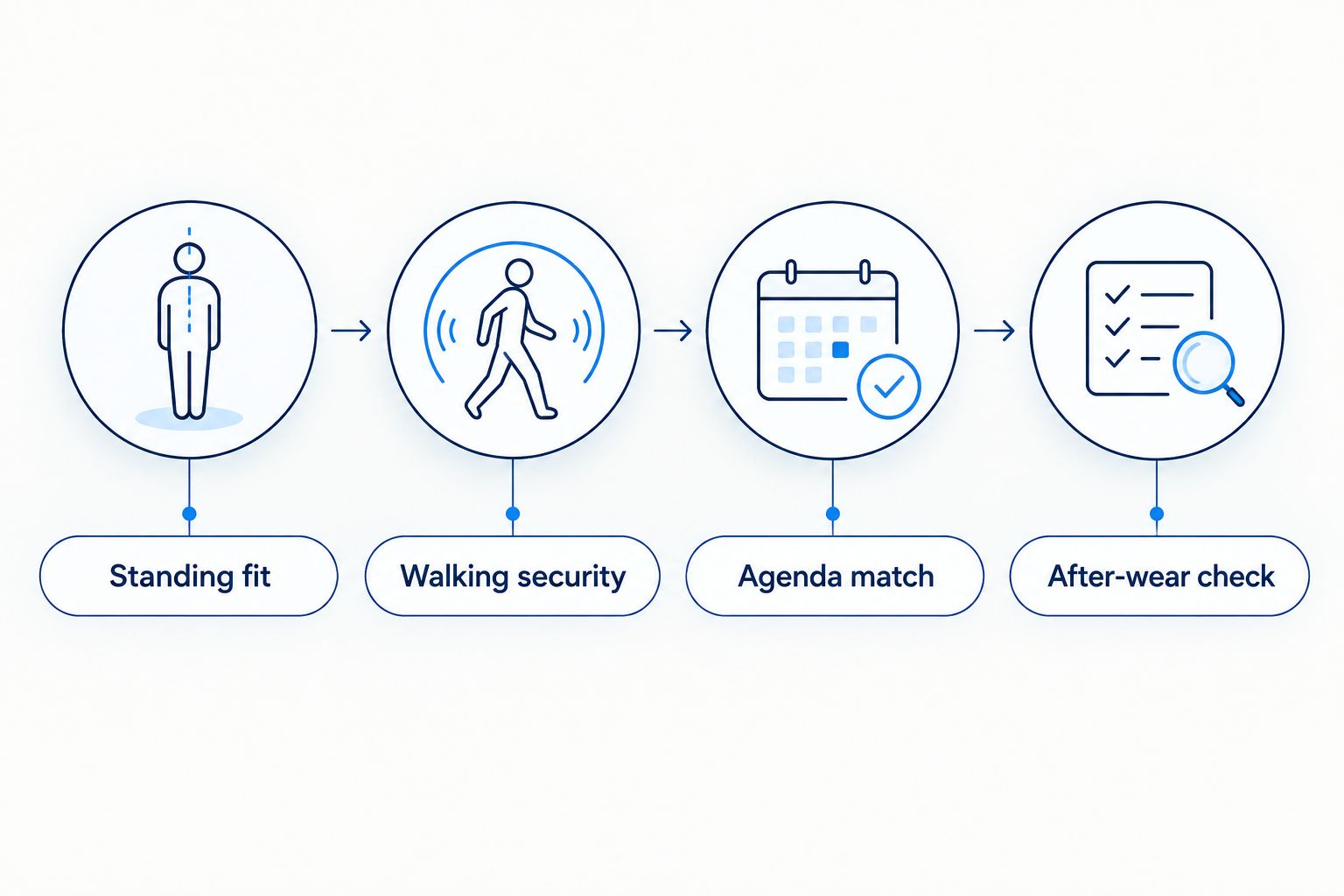
Use this sequence before making a workday commitment:
These are practical screening steps, not a laboratory test. A successful fitting gives you a reason to continue assessing the shoe, not a guarantee about an entire day.
The useful question is not whether kitten heels are comfortable in general. It is whether a particular pair leaves you free to concentrate on the work in front of you.
A shoe that stays unobtrusive during a seated negotiation can become distracting during a reception. Conversely, a pair you already trust for standing might be entirely suitable for a presentation without needing a new purchase.
For your 2026 work wardrobe, separate presentation requirements from physical requirements. The first includes dress code, trouser length and the formality of the room. The second includes fit, movement, floor conditions and how much time you will spend standing.
Neither list cancels the other. Performance Luxury asks the product to address both, rather than asking you to admire one and tolerate the other.
Heel height tells you something about a shoe, but it does not describe the entire experience. These factors deserve a place in the decision:
Do not buy a larger size simply to escape a narrow forefoot. Extra length can introduce slipping without putting room where you need it. Compare a different width, last or upper cut instead.
A pointed-looking shoe is not automatically unsuitable, either. What matters is where your toes finish inside it, whether the forefoot has space and whether the upper clears rather than compresses sensitive areas.
For a considered 2026 shortlist, compare how each construction holds your foot. Neither a closed back nor an open heel is a universal comfort winner.
The catalogue examples below illustrate different silhouettes, not comparative wear-test results. The relevant criteria are heel retention, upper contact and the setting in which you intend to wear them.
| Catalogue example | Best for considering | Useful design distinction | What you still need to check |
|---|---|---|---|
| Marylyn Pumps Black 60 | A closed-pump finish with tailoring for presentations | The catalogue identifies a black pointed-toe pump | Interior forefoot room, heel-counter contact and whether your heel stays seated |
| Blaire Slingback Nude 60 | A slingback silhouette for work continuing into dinner | The catalogue identifies a warm-nude pointed toe and an adjustable strap | Strap position, adjustment range and retention while walking and turning |
A closed pump provides coverage at the heel, but that coverage can rub if the shape does not suit you. A slingback offers adjustment through its strap, but adjustability does not prove that the strap will sit correctly on your heel.
Choose the construction that passes your movement check. The outfit can accommodate either; your foot should not have to negotiate with it.
A useful 2026 fitting checklist should reproduce movements, not merely confirm that you like the reflection. Follow the retailer's fitting and return conditions, and keep the shoes on an appropriate clean surface during assessment.
Stand with your weight naturally distributed. Check whether the forefoot feels squeezed, whether an upper edge digs in and whether you feel pushed towards the front.
Do not explain away immediate discomfort as the price of a polished silhouette. A board presentation already has enough content without an additional subplot about your toes.
Walk at your normal pace rather than taking careful showroom steps. Stop, turn and start again, paying attention to whether your heel lifts excessively or a slingback strap moves.
Check both feet. A fit decision that considers only the more comfortable foot is incomplete.
Write down what the important day includes: arrival, presentation, standing conversation, dinner and departure. Then identify which part asks the most of the shoe.
If the longest standing period follows the meeting, do not assess suitability only against the meeting. The least photographed part of the evening still belongs in the brief.
Remove the shoes and notice any tenderness, rubbing or recurring pressure. Record the location rather than giving the whole pair a vague comfortable-or-uncomfortable label.
That detail helps you distinguish an upper-cut problem from heel slipping or a forefoot that needs more room. It also makes your next comparison more intelligent.
HOPE ROZA is for women choosing Performance Luxury for consequential work and meaningful occasions. That means considering the product's physical experience alongside its visual role, not assuming a refined appearance excuses poor wearability.
Air Vault™ is HOPE ROZA's patent-pending triple-layer sole architecture for refined heels. It is engineered to manage impact, return energy, distribute pressure and reduce loading beneath the forefoot while preserving a slim luxury profile.
Those are design functions, not a promise that every wearer will experience the same result. They do not establish a universal comfortable-wear duration, and they do not remove the need to assess fit.
The distinction matters when shopping in 2026: ask what the construction is designed to do, whether the particular product includes it and what evidence supports any wear claim. Do not transfer a brand-level technology description to every shoe in a collection.
A well-described sole system also cannot make an unsuitable upper cut disappear. If the shoe compresses your forefoot or fails to retain your heel, cushioning addresses a different question.
Treat “all day” as a claim that needs conditions. A useful assessment explains who wore the shoe, how long they wore it, what they did and which surfaces they encountered.
For HOPE ROZA, Hours of Wear means the number of hours a shoe has been assessed as comfortable in sample wearer testing. Read a product-specific value as a result from that assessment, not as a medical guarantee or an individual promise.
Your 2026 buying checklist should ask:
If those details do not answer your decision, let your own fit assessment carry more weight. A product description cannot attend the conference on your behalf.
Kitten heels are suitable only when the particular pair remains secure and comfortable during standing and movement. A low-looking heel alone does not establish that suitability.
For a conference, prioritise the standing portions of the schedule, including registration, networking and the reception. Test those demands before making the event the shoe's first substantial outing.
An insole is an option to assess, not an automatic solution to poor fit. An insert occupies interior space and changes the relationship between your foot and the shoe.
Recheck forefoot room, upper pressure and heel security after adding one. If the shoe now squeezes or your heel sits less securely, extra cushioning has introduced another problem rather than resolved the original one.
Stop treating persistent pain as a breaking-in exercise. Seek medical advice for persistent pain, swelling, numbness, skin breakdown or difficulty walking.
This guide supports footwear decisions; it does not diagnose symptoms or recommend treatment. The NHS's public guidance on foot pain advises against tight shoes and recommends medical assessment when symptoms persist or interfere with normal activities.
Can I wear kitten heels with a bunion?
Suitability depends on interior length, forefoot width, upper cut, seam placement and heel security, not the external toe shape alone. Closed coverage should clear the joint rather than compress it; seek medical advice for persistent pain, swelling, numbness, skin breakdown or walking difficulty.
Should my toes touch the pointed end of a pump?
Your toes should not be compressed into the decorative point. Assess usable interior space and whether the widest part of your forefoot sits comfortably within the shoe.
Can a kitten heel be too loose even if it feels soft?
Yes, softness does not establish secure fit. Check for excessive heel movement and whether you grip with your toes to keep the shoe on.
Does an adjustable slingback strap guarantee a secure fit?
No, adjustability does not guarantee that the strap suits your heel. Check its position and retention while walking, stopping and turning.
Should I check work heels with the hosiery I plan to wear?
Yes, assess the shoe with your intended hosiery rather than a different fitting setup. Recheck slipping and pressure before committing to the complete outfit.
Can worn heel tips change whether I trust my work shoes?
Yes, heel-tip condition belongs in your footwear inspection. Have damaged or unevenly worn components assessed by a shoe-repair professional before relying on the pair for an important work occasion.
Before your next important workday, write down the part of the schedule your shoes usually fail: the standing reception, the walk between meetings or dinner afterwards. Make that the deciding test for your next pair.
The most useful wardrobe upgrade is sometimes a clearer brief, not another shoe. Dress Like It Matters.


