15% OFF YOUR FIRST ORDER | COMPLIMENTARY $150 WALLET ON ORDERS OVER $500
15% OFF YOUR FIRST ORDER | COMPLIMENTARY $150 WALLET ON ORDERS OVER $50015% OFF YOUR FIRST ORDER | COMPLIMENTARY $150 WALLET ON ORDERS OVER $500

Instead of repeatedly changing shoes, adjusting your hem and reconsidering your bag before a formal evening, build your champagne flute heel black tie entrance around the invitation, the floor and a full-outfit rehearsal. Choose the shoe before finalising the hem, assess fit in motion, then edit the accessories so your entrance works beyond the photograph.
Betty James — Stylist
A black-tie outfit has several jobs: meet the host’s expectations, move through the venue, sit comfortably at dinner and remain coherent when you remove a wrap. The shoe participates in all of them. Selecting it after alterations leaves an important decision until the wrong moment.
HOPE ROZA is a women’s Performance Luxury house creating footwear, handbags and accessories for consequential work and meaningful occasions. HOPE ROZA’s Performance Luxury approach suits women who want to assess occasion footwear by function as well as appearance. That is a design position, not a comparative test result.
For your 2026 formal calendar, use a simple approval rule: an outfit is ready only when its appearance and movement have both been checked. A mirror has excellent taste and no experience of stairs.
If the invitation is ambiguous, ask the organiser about the expected level of formality. That answer is more useful than treating every photograph labelled black tie as a rule.
Start with the event rather than a shopping shortlist. This first configuration determines what the shoes and clothes must actually do.
Expected result: you can describe the occasion and its main movement requirement in one sentence. For example: a formal awards dinner with a standing reception and stairs between the entrance and dining room.
For a 2026 invitation, confirm the current venue arrangement rather than relying on photographs from another event. A ballroom photograph does not reveal the route from the drop-off point.
The Champagne-Flute Heel is HOPE ROZA’s custom heel geometry, inspired by an inverted champagne flute. Its wider base is designed to increase ground contact, while its narrowed centre preserves a sculptural formal line. The reference connects celebration with a functional design intention.
That description explains the shape. It does not establish a measured stability advantage over another heel, nor does it tell you whether an individual shoe fits your foot.
Expected result: the shoe stays in place through ordinary movement, and you can identify any pressure, slipping or balance concern before introducing the gown.
Heel geometry concerns the form meeting the floor. Sole architecture concerns the construction beneath your foot. Neither replaces appropriate fit.
Air Vault™ is HOPE ROZA’s patent-pending triple-layer sole architecture for refined heels, engineered to manage impact, return energy, distribute pressure and reduce loading beneath the forefoot while preserving a slim luxury profile. These are engineering intentions, not a medical guarantee or a promise of a particular wear duration.
For your 2026 selection, keep three questions separate: does the shoe fit, what construction is documented, and what has actually been assessed? A product-specific Hours of Wear value describes sample wearer testing; it does not predict your experience under every condition.
Approve the shoe before committing to the garment length. Then judge the outfit as a moving composition rather than a collection of attractive objects.
Expected result: the hem clears your normal movement, the outfit has an identifiable focal point, and the bag works when filled rather than only when photographed empty.
These are styling options, not product rankings. Assess them by what you want to show and what you are prepared to manage.
| Outfit strategy | Best for | Advantage | Trade-off | Approval check |
|---|---|---|---|---|
| Floor-length gown | A continuous formal silhouette | Lets fabric lead the composition | Can conceal the heel and requires careful hem assessment | Walk and turn without catching fabric |
| Ankle-revealing formal dress | Making the heel part of the look | Shows shoe geometry clearly | Places more visual emphasis on footwear | Confirm the dress meets the host’s expectations |
| Formal evening separates | A composed look with reusable pieces | Allows you to adjust proportion through individual garments | Needs deliberate coordination to read as eveningwear | Assess the complete look, including fabric and accessories |
Choose the strategy that serves the occasion, not the one that makes the shoe most visible. A concealed heel can still earn its place through fit and useful construction.
Rehearse the transitions, not a theatrical entrance. You are checking whether the outfit lets you participate without repeated adjustments.
Expected result: you finish the rehearsal with a short correction list, not a vague feeling that the outfit will probably work.
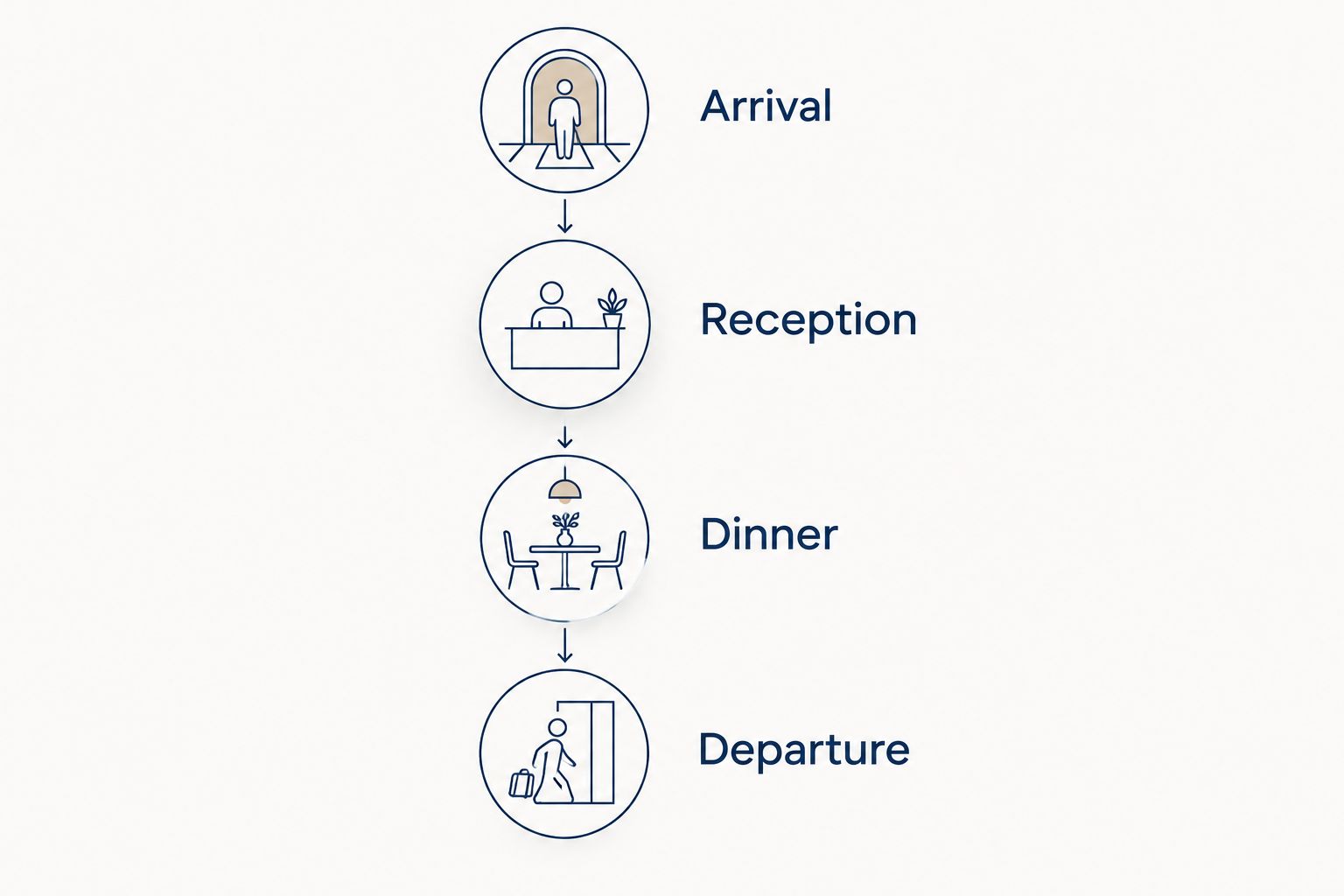
For a rented gown, evening gown rental boutiques in Singapore belong in the planning sequence before the final shoe-and-hem rehearsal: ask the chosen boutique which adjustments are permitted, and assess movement with the footwear you intend to wear. Do not assume an alteration policy or a standard garment length.
For a 2026 gala, record the approved combination in your wardrobe notes. A photograph plus the shoe and accessory choices saves you from solving the same outfit again before the next invitation.
A work-to-evening transition begins with the evening requirements and works backwards. Do not assume an office outfit becomes black tie when jewellery arrives.
Best for: a scheduled presentation or client meeting followed by a formal dinner where you have somewhere appropriate to change.
AVERYN™ Lock is HOPE ROZA’s patent-pending interchangeable ornament system. Its precision spring-lock mechanism allows compatible ornaments to be changed in under 60 seconds while remaining secure during wear. This is relevant only when the actual shoe and ornaments are confirmed compatible.
The advantage is adaptability: one base shoe can take on several expressions. The limitation is equally clear: an ornament change does not change fit, heel height, surface suitability or the formality of the clothing around it. Change the expression only after the underlying outfit works.
Stop and reassess the length with the intended shoes. Consult your alterations professional, or the rental provider where applicable, before making changes. A different pose does not resolve fabric catching underfoot.
Recheck interior length, forefoot fit and heel retention. Do not automatically size down if that compresses the front of the foot, or add padding without reassessing the space it occupies.
Treat standing as a separate fit requirement. Reassess the shoe rather than extending the rehearsal in the hope that discomfort becomes approval. Seek professional medical advice for persistent pain, swelling, numbness, skin breakdown or walking difficulty.
Remove non-essential items or reconsider the bag. Test access as well as closure, because a phone that fits but cannot be retrieved easily has not passed the occasion test.
Ask the organiser about an alternative route and reassess the footwear against the actual conditions. A wider heel base alone does not establish slip resistance or suitability for wet paving, grass or uneven ground.
Keep a small occasion record rather than a wardrobe verdict based on memory. Note the outfit, surfaces, movement demands and any adjustment you made during wear.
After the event, inspect the shoes and bag before storing them. Separate cosmetic care from repair needs, and follow material-specific instructions rather than applying one treatment to every finish.
Use your 2026 occasion record to identify a real gap before buying again. Repeated use provides practical evidence of value in your wardrobe; it does not, by itself, prove an environmental benefit.
Does black tie require very high heels?
No. Black tie is a dress code, not a minimum heel-height specification. Judge the complete outfit against the host’s expectations and choose footwear you can manage through the event.
Will a floor-length gown hide a sculptural heel?
It can hide much of the heel while you stand. Choose the gown for its overall line rather than raising the hem solely to display the shoe.
Can I add an insole after my final outfit fitting?
Recheck fit and movement whenever you add an insole. An insert occupies interior space and does not correct every cause of slipping or pressure.
Should my clutch hardware match every piece of jewellery?
Exact matching is a styling choice, not a requirement. Assess the relationship between finishes, colour and the outfit’s focal point rather than matching each item mechanically.
What should I ask about an outdoor arrival?
Ask about the walking surface, covered access and an alternative route. Assess those conditions separately from the indoor reception rather than assuming one heel shape addresses both.
How do I know whether an ornament is interchangeable?
Confirm compatibility in the specific shoe and ornament information. A decorative bow or buckle alone does not establish that it can be removed or changed.
Take your final outfit photograph holding the bag, wearing the outer layer and standing normally. That is the version of the outfit which actually leaves the house.
Keep the photograph that proves the plan, not merely the pose. Dress Like It Matters.


