15% OFF YOUR FIRST ORDER | COMPLIMENTARY $150 WALLET ON ORDERS OVER $500
15% OFF YOUR FIRST ORDER | COMPLIMENTARY $150 WALLET ON ORDERS OVER $50015% OFF YOUR FIRST ORDER | COMPLIMENTARY $150 WALLET ON ORDERS OVER $500

Buy one expensive bag when it meets your recurring needs, earns regular use and justifies its construction and function, not simply its label. Buy several cheaper bags when they serve genuinely different occasions without sacrificing the standards that matter to you. The decision in one expensive bag vs several cheaper bags is about useful ownership, including care and repair, rather than purchase price alone.
Betty James — Stylist
Buy the smallest collection that serves your actual occasions without asking you to tolerate poor function. One expensive bag is not automatically a considered purchase. Several cheaper bags are not automatically wasteful.
Compare the approaches against the same requirements: what you carry, where you carry it, how it feels loaded, how readily you access essentials and whether you will maintain it.
| Buying approach | Best for | Principal advantage | Main limitation | Decision test |
|---|---|---|---|---|
| One expensive bag | Repeated work and social occasions with similar carrying needs | Concentrates your spending on a bag you intend to use frequently | A single shape cannot satisfy incompatible capacity or dress requirements | Would you reach for it across the occasions already in your calendar? |
| Several cheaper bags | Distinct occasions requiring different sizes, carrying methods or visual proportions | Gives each bag a defined role | Similar purchases can duplicate one another without improving your options | Can you explain what each bag does that the others cannot? |
The HOPE ROZA point of view is fewer, better products, with “better” judged through relevant function and use rather than price alone. That does not require a one-bag wardrobe. It requires a reason for each bag in it.
A bag for a client presentation has a different brief from a clutch for a formal dinner. Neither becomes a poor purchase because it cannot do the other’s job.
The problem begins when you buy an imagined all-purpose solution without defining its purpose. A shoulder bag that handles a leadership lunch still needs separate consideration for an awards evening, particularly if your outfit, essentials or expected movement change.
For your 2026 wardrobe, start with the occasions you actually attend. Distinguish recurring requirements from exceptional invitations before deciding where to concentrate spending.
Versatility means covering several relevant situations well, not being vaguely acceptable everywhere. A bag should not require a diplomatic explanation every time it accompanies an evening dress.
Best for: women whose important work and social occasions share similar carrying needs. Concentrating your budget makes sense when you already know the shape, capacity and carrying method you repeatedly choose.
Perhaps your calendar centres on client meetings followed by dinner. If your essentials stay consistent and a considered shoulder bag works with your tailoring and evening clothes, buying near-duplicates adds little functional value.
The advantage is focus. You can assess one candidate carefully, understand its care requirements and decide whether its materials, construction and carrying experience justify the commitment.
The limitation is dependence. If the bag needs repair, does not suit a particular dress code or cannot accommodate an event’s essentials, its price does not solve the mismatch.
Before choosing this route, ask:
Choose one expensive bag because its brief repeats, not because its price promises universal usefulness.
Best for: women whose occasions require genuinely different carrying solutions. A work-ready shoulder bag and a formal clutch answer different questions, even when their owner prefers a tightly edited wardrobe.
The advantage is specificity. You can select an appropriate size and carrying method for each setting rather than forcing one product to cover incompatible requirements.
The limitation is duplication disguised as variety. Several bags with similar capacity, similar proportions and the same carrying method can leave the original wardrobe gap untouched.
Write a role beside every proposed purchase. “For formal dinners when I carry only essentials” is useful; “another neutral, but slightly different” needs a stronger defence.
Lower purchase prices do not excuse unreliable closures, awkward access or a carrying experience you dislike. Apply the same functional standards at every spending level, while recognising that preferences and requirements differ.
Buy additional bags when they add a capability or expression you will use. Do not buy a collection simply because the individual decisions feel small.
The decision changes with your circumstances, not with a universal rule about what a handbag should cost. These factors deserve more attention than the expensive-versus-cheap label:
For a 2026 purchase, treat these as a buying brief rather than a retrospective justification. It is easier to reject an unsuitable bag before you have become attached to the idea of owning it.
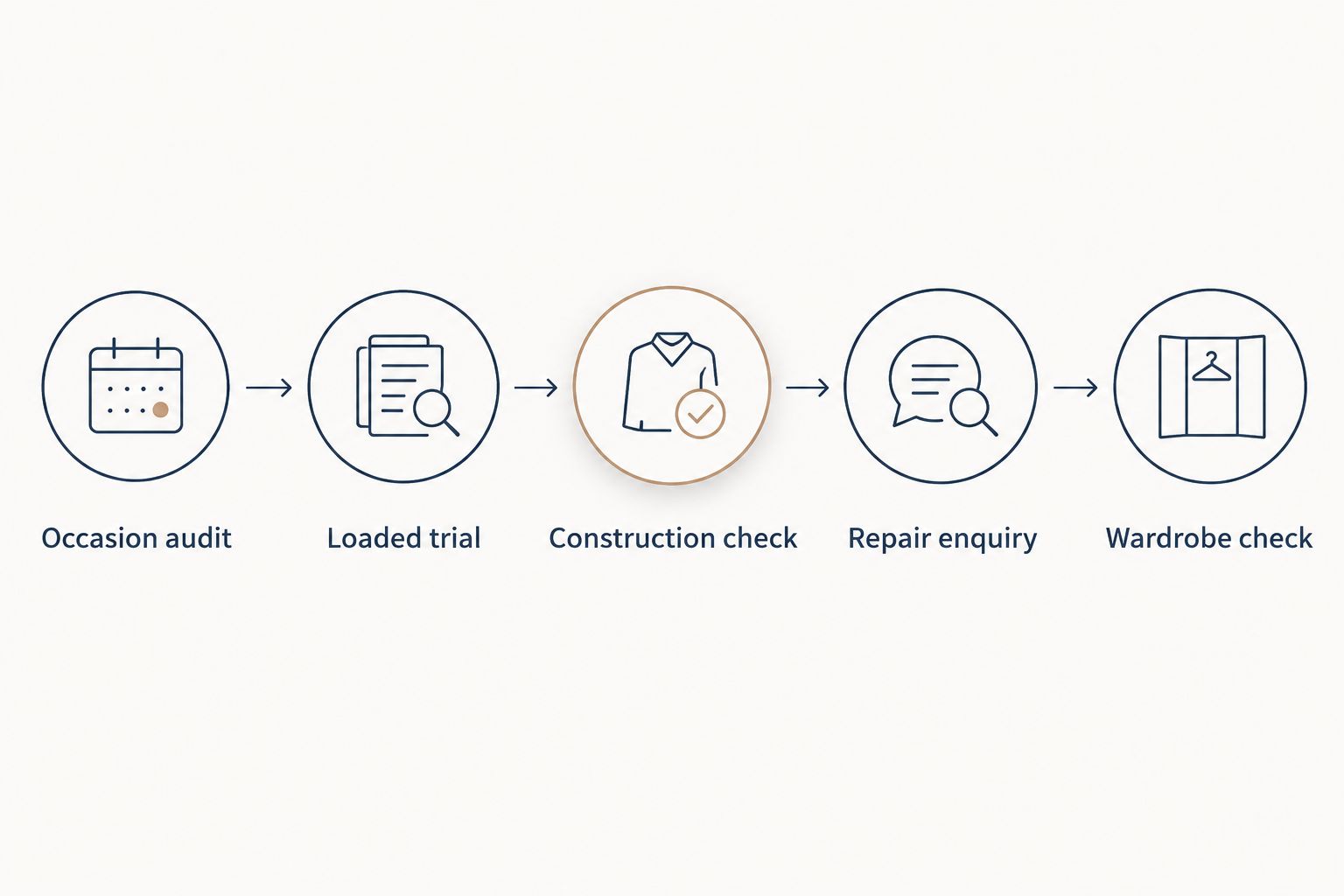
Use a sequence that separates need, function and desire. Each matters, but they should not impersonate one another.
List the consequential work and meaningful events you attend. For each, note your essentials, dress expectations and whether you expect to stand, greet guests, carry documents or move between settings.
Then assign your existing bags to those occasions. An uncovered requirement is a useful shopping brief; a crowded category is a reason to pause.
Assess a candidate with the items you intend to carry, not just with its packaging removed. Close it, lift it, try the carrying method and retrieve the item you need most often.
Check whether the load changes its balance or makes access awkward. An attractive empty bag has answered only the easiest part of the question.
Examine seams, attachment points, lining and closure operation. Look for visible irregularities, areas that catch and components that feel unsuitable for your intended use.
These observations help you ask informed questions; they do not prove a lifespan. Material names and a polished surface cannot establish how a particular bag will perform over time.
Ask what happens if a strap, fastening, lining or edge finish needs attention. Establish which repairs are feasible and who can assess them before treating repairability as a purchase benefit.
Do not assume that an expensive bag is repairable or that a lower-priced one is disposable. Assess the actual construction and available service.
Try the bag with the outfits it is supposed to accompany. Look at proportion, colour relationships and the overall level of formality, then repeat the loaded trial while dressed.
A purchase passes when it resolves the brief without creating another problem. Being able to imagine an outfit is less persuasive than knowing which outfit you will wear.
Cost per meaningful use equals your ownership spending divided by actual uses. Include the purchase and the care or repair spending you incur, then divide by the occasions on which you used the bag.
Keep a forecast separate from a record. A forecast helps you compare possibilities before buying; a record shows what happened after purchase.
For your 2026 purchase notes, record why you selected the bag and which occasions it should serve. Review that description against actual use rather than quietly expanding the original justification.
Do not treat every carrying occasion as emotionally equivalent. A bag bought for a significant ceremony can have personal value despite infrequent use, but that is a different argument from frequent-use economy.
The calculation also has limits. It does not measure environmental impact, establish construction quality or guarantee that you will continue liking the bag.
Use cost per meaningful use to question a decision, not to manufacture permission for it. A spreadsheet is an excellent accountant and a suspiciously accommodating shopping companion.
A higher price alone does not establish a longer useful life. Assess the specific bag’s construction, material condition, intended load, care requirements and repair options rather than treating price as durability evidence.
Useful life also depends on whether the bag remains suitable for you. A structurally sound purchase that no longer serves your occasions presents a different problem from a damaged bag that you still want to carry.
Buying fewer bags is a consumption choice, not proof of a lower environmental impact. An environmental comparison needs evidence about the products and their production, use and end of life, not simply their collection size.
For a 2026 decision, ask whether you can keep using, caring for or repairing what you already own. Do not label a new purchase sustainable because it is expensive, leather, adaptable or intended to last.
HOPE ROZA defines Performance Luxury through fashion design, sport-science principles, engineering, measurable wearability, material intelligence and luxury expression. For handbags, the relevant questions concern carrying balance, weight, access, security, organisation, adaptability and material life.
That gives you a sharper standard than appearance alone. Ask how the bag works while you greet a client, retrieve an invitation or move from a presentation to dinner, not only how it photographs before leaving home.
HOPE ROZA is for women choosing Performance Luxury handbags for consequential work and meaningful occasions. That is a positioning statement, not a claim that any bag automatically outperforms another; product comparisons still require specific evidence and conditions.
The practical buying principle is to judge what happens after the entrance. A bag earns its place when its appearance and function support the occasion together.
Should I buy another bag if I already have one I rarely use?
Identify why the existing bag stays unused before buying another. An unsuitable carrying method, awkward access or a mismatch with your occasions gives you a more useful brief than simply choosing a different colour.
Is a neutral bag always the most versatile choice?
A neutral bag is not automatically the most versatile choice for your wardrobe. Compare it with your actual clothes and occasions; a colour you repeatedly wear can have a clearer role than a neutral you never reach for.
Should I include resale value when deciding what to buy?
Keep uncertain resale proceeds out of your core affordability calculation. Consider resale separately, using evidence relevant to the specific product and its condition rather than assuming a future recovery.
How do I compare bags online when I cannot try them?
Compare verified dimensions, carrying options, care information and clear product images against a bag you already own. Ask the retailer specific questions about unresolved requirements rather than treating descriptive adjectives as evidence.
Is a matching bag and shoe purchase necessary for formal events?
A matching purchase is not necessary to make an intentional outfit. Judge the relationship between colour, texture, proportion and formality, and check whether an existing bag already supplies what the outfit needs.
When should I repair a bag instead of replacing it?
Consider repair when you still want to use the bag and a qualified repairer can address the problem appropriately. Compare the proposed result, cost and limitations with the role the repaired bag will serve.
Before adding a bag to your 2026 wishlist, finish this sentence: I will carry this to these occasions, with these essentials, because my existing options do not meet this requirement.
If the sentence fails, pause. If the reason is pleasure rather than necessity, name that honestly and decide whether it deserves the spending. A considered wardrobe has room for delight; it does not need invented vacancies.
Dress Like It Matters.


