Vana or Vespera Wallet on Qualifying Orders Over $500

Navy is the default for blue pump shoes with a tailored work wardrobe; cobalt suits a deliberate colour accent, slate blue suits tonal dressing, and powder blue suits lighter occasion tailoring. These are styling recommendations, not product-performance rankings: choose the shade against your clothes, then assess the actual shoe’s fit, construction and suitability for the meeting ahead.
Betty James — Stylist
Blue gives you an alternative to black without requiring you to rebuild the outfit. The useful question is not whether blue looks professional in isolation. It is whether that particular blue belongs with your tailoring, the room and the movement your day requires.
For a client pitch, a darker pump can keep the emphasis on the complete silhouette. For an industry reception, a brighter shade can supply the contrast that a plain suit needs. Neither choice requires a matching handbag or a second blue purchase.
Start with the clothes you already wear to important meetings. Before ordering, use the guide to choosing the right shoe size online, then assess the shoe rather than assuming your usual size settles the question.
HOPE ROZA’s Performance Luxury approach suits women choosing work pumps for both presentation and physical experience. Colour earns attention; fit determines whether you want to keep wearing the shoe.
Judge the shoe against these criteria before choosing a shade:
For your 2026 wardrobe, resist choosing a blue solely because it photographs well. A pump has to make sense beside your trousers, beneath your dress hem and on your feet.
The order below prioritises wardrobe integration, then deliberate contrast. It compares colour directions, not named products or tested comfort results.
| Colour direction | Best for | Styling advantage | Main limitation |
|---|---|---|---|
| Navy | Restrained work tailoring | Introduces blue without a strong colour break | Can look almost black in low light |
| Cobalt | A single focal accent | Gives a neutral outfit a clear point of interest | Competes with other strong accents |
| Slate blue | Tonal and muted tailoring | Connects naturally with grey-led outfits | Needs checking beside warm neutrals |
| Powder blue | Lighter work-to-event dressing | Creates a lighter finish beneath pale tailoring | Offers less contrast beneath light hems |
A colour recommendation is not a fit recommendation. A navy pump that slips at the heel is not the right default simply because its shade works with your suit.
Navy is the first colour direction to consider when your work wardrobe centres on grey, cream, black or blue tailoring. Its depth lets you introduce colour without making the shoes the entire conversation.
Try navy pumps with charcoal trousers and an ivory blouse, or a cream suit with a darker top. With navy tailoring, compare the blues directly: close shades do not have to match exactly, but their relationship should look deliberate rather than accidental.
Navy pros:
Navy cons:
Best for: Board presentations, client meetings and leadership dinners where you want the complete outfit to register before the shoe.
Verdict: Buy if navy fills a real gap in your important-work wardrobe and the actual pair passes your standing-and-walking fit assessment.
Cobalt is the option when you want blue to be visible, not merely present. Use it beneath a controlled outfit so the contrast has a clear purpose.
A charcoal trouser suit, simple white shirt and cobalt pump create an easy-to-read composition. With a black dress, let the shoe provide the colour and keep the bag restrained. You do not need cobalt earrings, a cobalt belt and a cobalt handbag to prove that the shoes were intentional.
Cobalt pros:
Cobalt cons:
Best for: Industry events, creative presentations and promotion celebrations where a visible colour choice belongs in the room.
Verdict: Buy if you can name the outfits that need this accent. Skip if you are hoping the shoe will resolve an outfit already crowded with competing details.
Slate blue is a grey-influenced colour direction rather than a precise universal shade. Its appeal is the relationship it creates with charcoal, silver-grey and other subdued colours.
Try it with grey trousers, an off-white blouse and a jacket in a related depth. The outfit gets interest from tonal differences rather than sharp contrast. Check the actual pump beside your clothes because one slate blue can lean cool and another can appear considerably warmer.
Slate blue pros:
Slate blue cons:
Best for: Advisory meetings, professional introductions and conference dressing built around a muted palette.
Verdict: Hold until you have compared the actual shade with your principal work trousers and jacket. Buy for the relationship between those pieces, not for the colour name.
Powder blue makes sense when the outfit itself is light: pale grey suiting, ivory separates or a restrained printed dress. It creates a different finish from the visual weight of navy.
For a daytime award presentation followed by a reception, try a pale suit with a simple top and powder blue pumps. Keep the rest of the palette disciplined. The shoe should connect the outfit, not introduce a pastel theme that the occasion never requested.
Powder blue pros:
Powder blue cons:
Best for: Daytime ceremonies, professional celebrations and lighter leadership-event dressing.
Verdict: Wait if your wardrobe is predominantly dark. Buy only when the shade resolves an existing outfit and the shoe itself meets your fit requirements.
Navy comes first because this guide prioritises restrained wardrobe integration. Cobalt, slate blue and powder blue follow as distinct styling choices, not progressively inferior shoes.
These 2026 recommendations use the same criteria throughout: wardrobe connection, contrast, occasion relevance and repeat use. They do not establish differences in cushioning, stability or comfortable wear duration. Those require product-specific evidence and an assessment of the individual pair.
Compare a prospective pair with 3 outfits you already wear for consequential work: your presentation outfit, your meeting outfit and your work-to-dinner outfit. The purpose is to discover a gap, not manufacture one.
Follow this sequence:
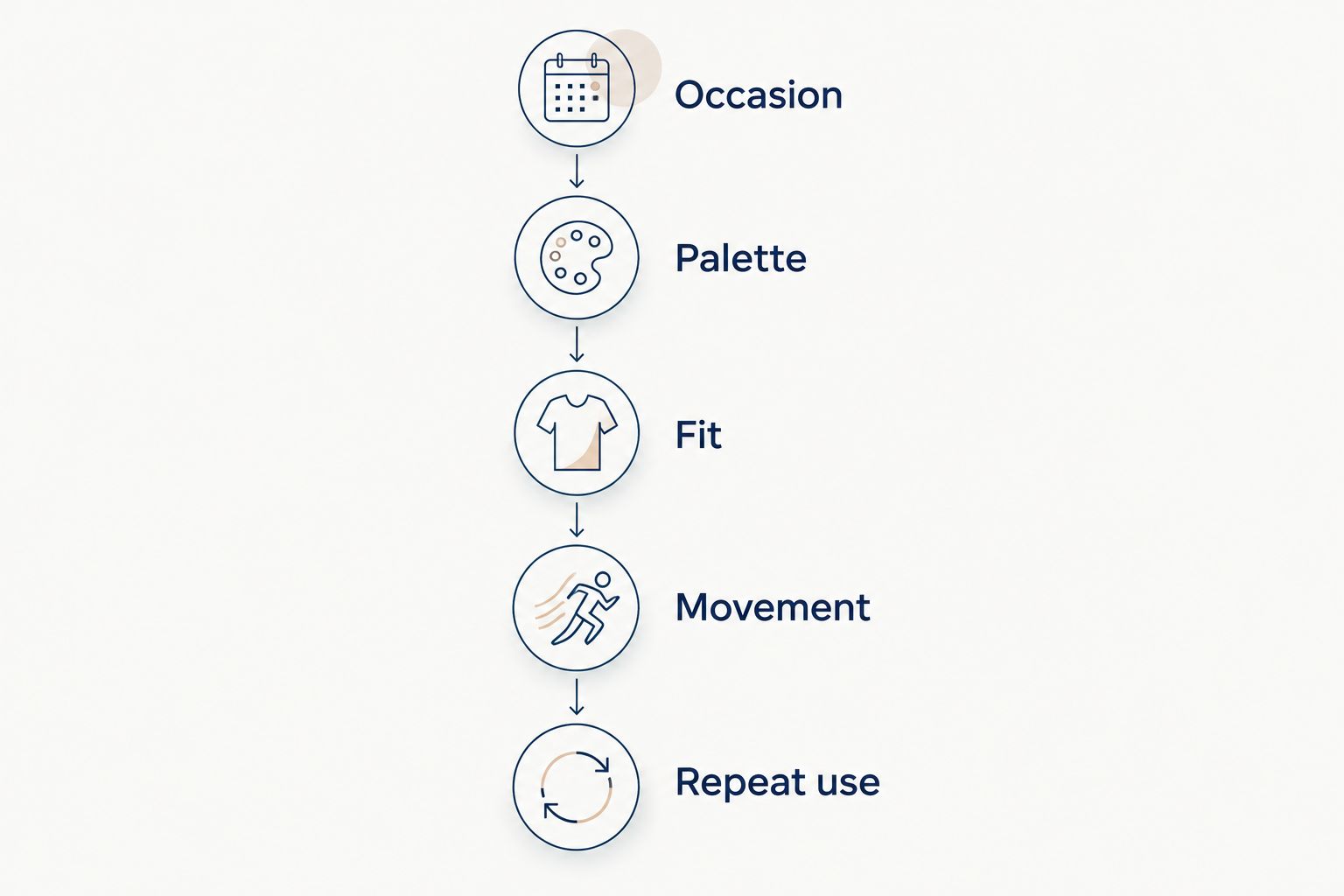
For a 2026 purchase, this test is more useful than assembling a list of colours you admire. If the shoe works only with clothes you have not bought, you are considering a wardrobe project rather than a straightforward addition.
A blue shoe does not need a committee of matching accessories.
A pointed-looking pump is not automatically too narrow, and a rounded-looking pump is not automatically roomy. The exterior shape does not tell you the available interior length, forefoot width, seam placement or how securely the heel holds your foot.
Check whether the upper clears the forefoot without compressing it. Then walk. Going up a size is not a complete solution if it introduces heel slipping while leaving the original pressure point unresolved.
Do not interpret persistent pain as evidence that you need more determination. Persistent pain, swelling, numbness, skin breakdown or difficulty walking calls for medical assessment, not another styling adjustment.
HOPE ROZA defines Performance Luxury through fashion design, sport-science principles, engineering, measurable wearability, material intelligence and luxury expression. The argument is straightforward: a work pump should be considered for how it performs for the woman wearing it, not only how it appears beneath a suit.
Air Vault™ is HOPE ROZA’s patent-pending triple-layer sole architecture for refined heels. It is engineered to manage impact, return energy, distribute pressure and reduce loading beneath the forefoot while preserving a slim luxury profile.
That describes a design system, not a universal comfort guarantee. It does not establish that every pump contains Air Vault™, promise a comfortable duration or make a shoe medical or corrective.
When assessing work pumps in 2026, ask what the construction claim actually means. If a product states Hours of Wear, look for the product-specific sample wearer testing behind that value, including conditions and limitations. A colour photograph cannot answer a wearability question.
Choose the bag for its role in the occasion before choosing its colour. You need access, a useful carrying arrangement and enough capacity for the essentials you actually bring to the meeting or dinner.
With cobalt pumps, a restrained bag keeps the colour hierarchy clear. With navy pumps, a different texture or neutral tone can prevent the outfit from becoming overly literal. Matching is one option, not proof of judgment.
For a 2026 work wardrobe, value comes from the whole combination being usable repeatedly. The HOPE ROZA point of view is fewer, better products: purposeful additions, not a fresh accessory requirement attached to every shoe.
Start with navy if you want a restrained alternative to black. Choose cobalt for a single visible accent, slate blue for muted tonal dressing or powder blue for pale work-to-event tailoring.
Keep the shade decision separate from the purchase decision. The right colour still needs the right fit, documented construction and a credible role in your calendar.
Can I wear blue pumps with a patterned work dress?
Yes, choose a blue that relates to the pattern or provides one deliberate contrast. Keep the remaining accessories restrained so the pattern and shoe do not compete for equal attention.
Should my handbag match my blue shoes exactly?
No, an exact match is optional. Choose the handbag for carrying function first, then assess whether its colour and texture support the complete outfit.
How do I judge blue pumps from an online photograph?
Use the photograph to assess visible design, not as proof of exact colour or fit. Read the product description and sizing information, then compare the actual shade and interior fit when you can assess the pair.
Can blue pumps work with black tights?
Yes, assess the contrast between the tights, hem and actual blue shade. Dark navy gives a quieter transition, while a brighter blue makes the shoe more distinct.
Does a kitten heel guarantee comfortable work shoes?
No, the heel category does not establish individual comfort. Interior fit, heel security, construction and the standing-and-walking demands of your occasion still need assessment.
Should I buy blue pumps or keep using my black pair?
Keep the black pair if it already resolves your work outfits and remains fit for use. Add blue when it provides a specific styling role, not simply because you want another colour.
Before adding the pair to your wardrobe, lay out the outfit you would wear to your next important meeting. Include the bag, then remove anything added solely to explain the shoes.
If the outfit becomes clearer, keep the edit. Your accessories should not need a supporting presentation.
Dress Like It Matters.


