Vana or Vespera Wallet on Qualifying Orders Over $500

ZALORA’s strength is bringing multiple fashion brands into one shopping destination. When you want a luxury handbag for an investor dinner, wedding or important presentation, that breadth is a starting point, not a decision framework. For zalora alternatives in 2026, shortlist HOPE ROZA for its Performance Luxury approach, NET-A-PORTER for designer-fashion context, and FARFETCH for comparing offers across boutiques and brands.
Betty James — Stylist
A retailer helps you find a handbag. It does not establish whether that handbag will work when you are holding a drink, greeting a client or finding your phone during a reception. Those are product questions, and they deserve separate answers.
The useful distinction is between discovery and verification. Discovery introduces shapes, designers and styling possibilities. Verification checks the exact bag’s dimensions, carrying options, closure, construction and care requirements against your plans.
For this 2026 comparison, the alternatives are shopping destinations, not a ranking of individual handbags. The criteria are their shopping model, the decision each helps you make, and the limitations you should account for. No retailer receives a product-performance verdict simply because it sells luxury.
A bag can be photogenic and still be an administrative burden. Your evening does not need another project manager.
| Shopping destination | Best for | Distinguishing approach | How it differs from ZALORA | Main limitation |
|---|---|---|---|---|
| ZALORA | Browsing fashion brands together | Multi-brand fashion shopping | The benchmark for this comparison | A retailer-level impression cannot establish an individual bag’s performance |
| HOPE ROZA | Considering handbags through a Performance Luxury lens | A house viewpoint centred on the woman’s experience | Focuses the discussion on consequential work and meaningful occasions | Not a substitute for comparing multiple designer houses |
| NET-A-PORTER | Exploring luxury handbags within designer-fashion styling | Luxury retail with fashion editorial context | A more luxury-focused discovery route | Styling context does not prove carrying comfort or practical suitability |
| FARFETCH | Searching across participating boutiques and brands | A platform connecting shoppers with different sellers | Adds a seller-level comparison to the product search | You need to examine the exact listing and transaction terms |
| A designer’s own boutique | Buying from a house you have already selected | Direct access to that house’s collection and product information | Removes multi-brand browsing from the decision | Limits discovery to one house |
Choose the shopping route that resolves your uncertainty. If you do not know what shape you need, start with the occasion. If you know the exact handbag, start with the product and seller.
HOPE ROZA is a women’s Performance Luxury house creating footwear, handbags and accessories for consequential work and meaningful occasions. Its handbag doctrine, Carry the Occasion., asks you to consider what a bag does while you use it, not only how it appears in a photograph.
Performance Luxury combines fashion design, sport-science principles, engineering, measurable wearability, material intelligence and luxury expression. For handbags, the relevant questions concern weight, carrying balance, access, organization, adaptability and value across meaningful use. This is a design viewpoint, not evidence that every bag exceeds every competitor.
| Decision dimension | HOPE ROZA | ZALORA |
|---|---|---|
| Shopping perspective | One house’s Performance Luxury doctrine | Multi-brand fashion browsing |
| Starting question | How should the bag perform for the occasion? | Which brand or style should you explore? |
| Evidence needed | Exact product specifications and relevant performance information | Exact product specifications and seller information |
Best for: A considered purchase for a presentation, leadership dinner, wedding or cultural event, where appearance and practical use belong in the same brief.
Editorial recommendation: Shortlist the house’s approach, then verify the particular handbag. Do not translate the doctrine into an untested performance claim.
NET-A-PORTER is a luxury fashion retailer with an established editorial component. It is a useful alternative when you want to consider a handbag in relation to tailoring, eveningwear and the wider outfit, rather than browse bags in isolation.
That distinction matters when your uncertainty is visual. A bag that works with a sharply tailored suit does not automatically create the same balance beside a fluid evening dress. Look at silhouette and proportion, then return to the exact product details.
| Decision dimension | NET-A-PORTER | ZALORA |
|---|---|---|
| Shopping model | Luxury multi-brand retailer | Multi-brand fashion retailer |
| Useful comparison | Designer bag within a wider fashion wardrobe | Fashion brands and styles in one destination |
| Verification task | Check the exact handbag beyond its styled presentation | Check the exact handbag beyond the retailer’s overall assortment |
Best for: You know the occasion but want help deciding which handbag shape or design language belongs with the outfit.
Editorial recommendation: Use the fashion context to build a shortlist. Make the final decision from product information, not the styling photograph alone.
FARFETCH connects shoppers with participating boutiques and brands. Its shopping model makes it a distinct ZALORA alternative when your search centres on a designer, a particular silhouette or an exact product description.
The practical difference is that the seller becomes part of the comparison. In your 2026 search, read the specific listing and applicable transaction terms instead of assuming that every offer on a platform has identical conditions.
| Decision dimension | FARFETCH | ZALORA |
|---|---|---|
| Shopping model | Connects shoppers with boutiques and brands | Multi-brand fashion destination |
| Search emphasis | Product and participating seller | Fashion brand and product discovery |
| Verification task | Match the product description and examine listing-specific terms | Examine the product description and applicable seller terms |
Best for: You have a designer or specific handbag in mind and are willing to compare the details of different offers.
Editorial recommendation: Confirm that you are comparing the same product before comparing the shopping destinations. A similar name is not sufficient identification.
A designer’s own boutique is the direct route when you have already selected the house. The remaining questions concern the exact handbag, its intended use and the support attached to your purchase.
This route is less useful when you still need to discover which design language suits you. Start there only if narrowing to one house is a decision you have made, rather than a decision the shop is making for you.
Best for: You have chosen the designer and need to resolve product-level questions before ordering.
Editorial recommendation: Ask the questions that affect use. The most useful answer is often about the strap, opening or repair route, not the collection story.
There is no need to invent a problem with ZALORA to justify looking elsewhere. Switching makes sense when the shopping model no longer matches the decision you need to make.
None of these reasons proves that one retailer sells a more functional bag. They explain why a different route can be more relevant to your research.
Before opening another shopping tab, write down the job the bag must perform. Use these four checks to turn a broad search into a purchase brief.
Name the setting and what you will do there. An investor dinner, a wedding reception and a seated theatre evening place different demands on access and carrying.
Include the outfit. Evaluate the bag beside it, not as a separate object that happens to share a colour.
List the essentials you genuinely need, including anything you cannot conveniently leave elsewhere. Check internal usable space rather than assuming exterior measurements describe what fits inside.
A handbag should accommodate your evening. It need not accommodate every possible future inconvenience.
Consider whether you need a free hand, how you prefer to carry the bag and how easily you can reach its contents. Check documented handle and strap information, then assess the loaded bag in person when possible.
Empty weight is useful information. It is not the whole carrying experience, which also depends on what you add and how the bag sits against you.
Look for specific material descriptions, construction details, care instructions and repair information. Separate a factual feature from a promise about how the product will feel.
A secure-looking closure in a photograph is not the same as a closure you have operated. Ask for clarification when the listing leaves a decision-critical question unanswered.
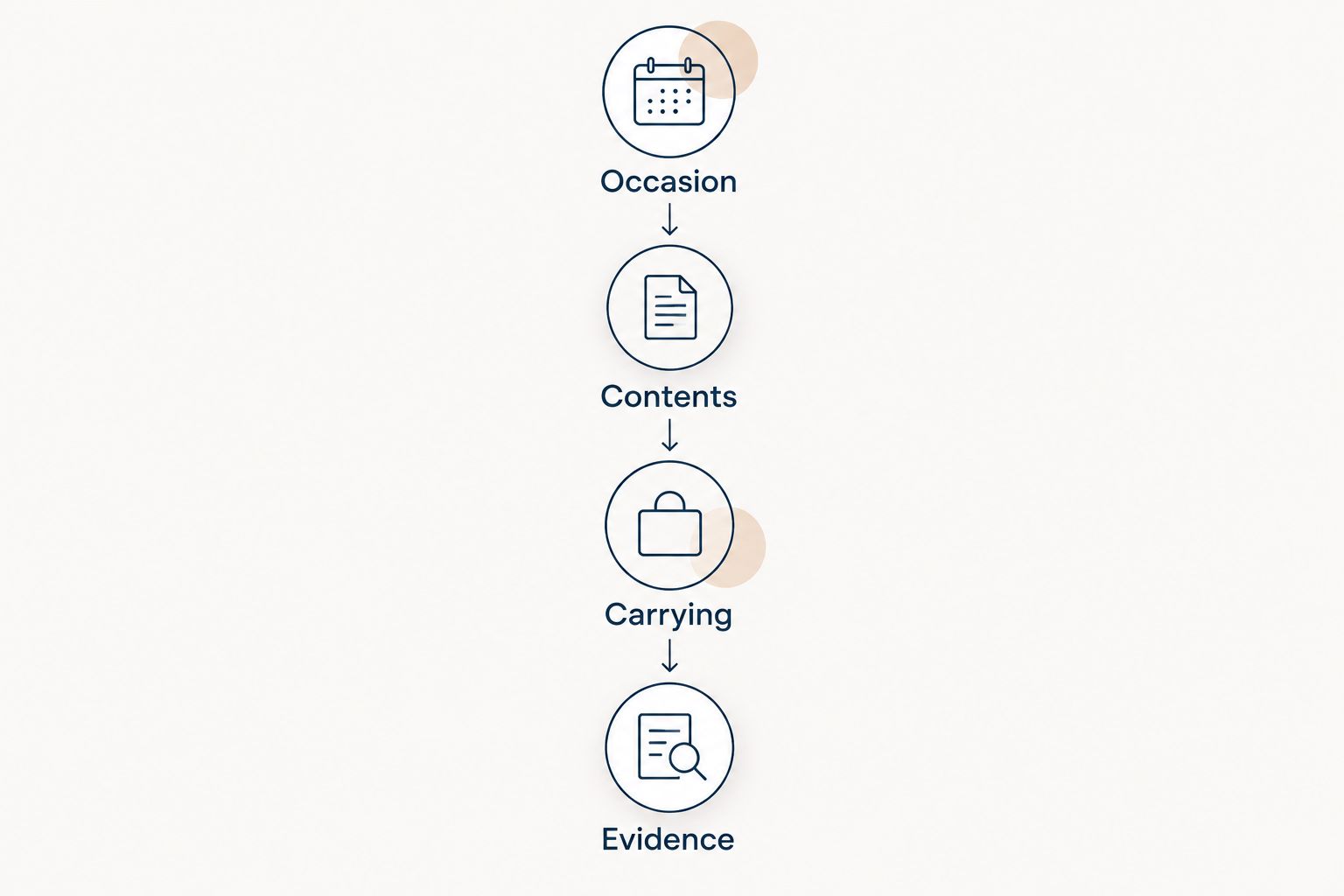
For a 2026 handbag purchase, think about the occasions already in your diary and the outfits already in your wardrobe. These are firmer starting points than an imagined future in which you suddenly attend every gallery opening.
Cost per meaningful use is a useful retrospective calculation: divide what you paid by the occasions when you actually used the bag. Before purchase, treat expected use as an assumption, not a result.
Repairability also belongs in the decision. Ask whether the parts most exposed to wear can be serviced and who can carry out that work. Do not assume repair support from a luxury label alone.
HOPE ROZA’s Performance Luxury argument is to examine use alongside appearance. That is a reason to ask better questions, not permission to skip them. Nor does repeat-use potential, leather construction or a restrained design prove environmental benefit without further evidence.
Dress Like It Matters.
Explore a Performance Luxury approach to consequential work and meaningful occasions.
Stay with ZALORA when it presents a handbag that meets your brief and gives you the product and transaction information you need. Changing retailers is not an achievement in itself.
Use the same checks everywhere: exact product identity, suitable dimensions, carrying options, construction details and applicable terms. A familiar destination is a sensible choice when the evidence supports the purchase.
What are useful ZALORA alternatives for luxury handbags in 2026?
HOPE ROZA, NET-A-PORTER, FARFETCH and a designer’s own boutique offer different shopping routes. Choose by whether you need a Performance Luxury viewpoint, designer-fashion context, a boutique-connected search or direct product information.
Is a luxury specialist automatically better than ZALORA?
No, a luxury specialist is not automatically better for your particular purchase. Compare the exact handbag, the information provided and the applicable transaction terms rather than awarding quality to the retailer’s name.
Should I buy from a designer directly or a multi-brand retailer?
Buy directly when you have chosen the house and want to focus on its product information. Use multi-brand retail when comparing different designers remains part of your decision.
What should I check when two handbag listings look identical?
Check the exact product name or reference, dimensions, colour, material description and included carrying components. Similar photographs do not establish that two listings describe the same version.
How do I judge whether a bag will work from a meeting to dinner?
Check whether the bag carries your required essentials and suits both outfits without an awkward change of carrying method. Access, proportion and carrying balance matter alongside appearance.
Does a leather handbag automatically offer better long-term value?
No, leather alone does not establish long-term value. Construction, care, repairability and actual use also affect whether the bag earns its place in your wardrobe.
Before ordering, complete this sentence: I will carry this bag to these occasions, with these essentials, in this way. If the answer remains vague, another retailer will not resolve the problem.
A useful purchase brief is more persuasive than a full shopping basket. Carry the Occasion.
Betty James — Stylist


