
A quality leather shoulder bag has no universal price in 2026: judge the current asking price against its documented materials, construction, carrying comfort and usefulness for your occasions. Include care and potential repairs in your decision, not just the purchase itself. The useful answer to how much does a leather shoulder bag cost is product-specific, not a market-wide figure that treats unlike bags as equivalents.
By Betty James — Stylist
Pay for a bag whose specific qualities justify its current price, not for the word leather alone. Compare like with like: intended use, dimensions, material disclosure, construction and service information should all enter the decision.
Start with how to spot quality leather in a handbag, then examine the complete bag. Good material cannot compensate for a strap that slips, an opening that obstructs access or a shape that does not hold your essentials.
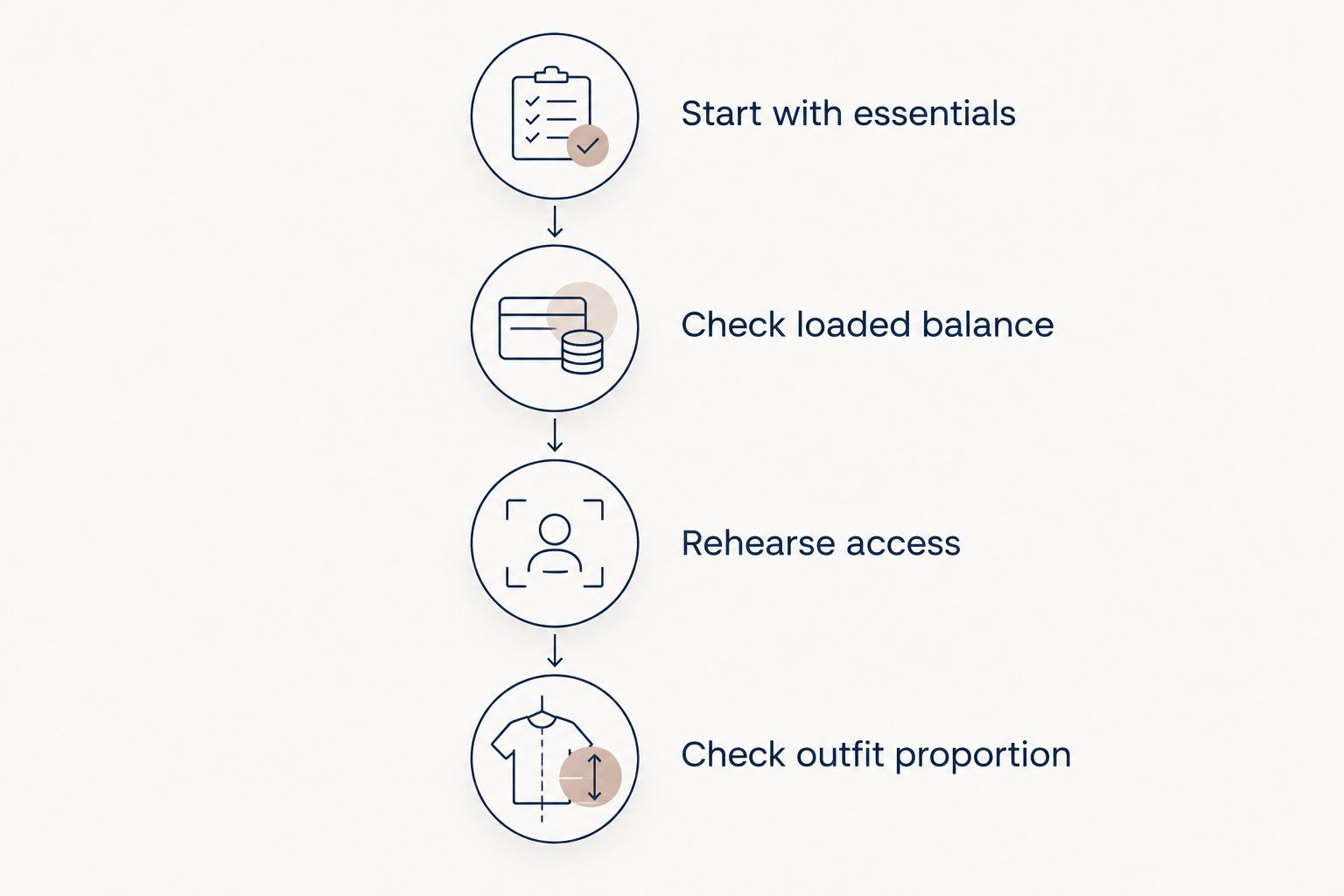
Use this sequence before comparing asking prices:
A higher asking price still needs an explanation. A lower one still needs inspection.
A shoulder bag for consequential work has a particular assignment. It must look appropriate at a client meeting, keep essentials accessible and remain manageable when the meeting becomes dinner.
An evening-focused bag has a different brief. It needs to work with the outfit, carry a considered edit and avoid demanding constant adjustment while you greet people or hold a glass.
The mistake is comparing those bags solely by price. You are comparing different jobs, and the less expensive purchase is not economical if it immediately leaves the original job unfilled.
Buy against a real occasion, not a vague promise of versatility. A bag does not become versatile because its description has an unusually busy social calendar.
Use the following table to separate useful distinctions from persuasive language. These are buying approaches, not product rankings or evidence of tested performance.
| Buying approach | Best for | Useful advantage | Limitation | What to verify |
|---|---|---|---|---|
| Lowest purchase price | A tightly defined need within a firm spending limit | Keeps the initial commitment controlled | Does not establish quality or useful life | Materials, construction and whether it fulfils the brief |
| Material-led selection | A buyer with a specific surface, feel or finish in mind | Makes material preference explicit | Leather terminology does not describe the whole bag | Body, trim, lining and care requirements |
| Function-led selection | Work occasions involving repeated access and carrying | Prioritises the experience of using the bag | Practicality alone does not settle visual suitability | Loaded balance, strap fit, opening and organisation |
| Occasion-led selection | Weddings, formal dinners and cultural events | Connects proportion and capacity to the invitation | A specialised bag needs enough relevant use | Outfit compatibility, essentials and carrying method |
| Long-term-value selection | A considered wardrobe with repeat use | Includes care, repair and continued relevance | Future use remains an estimate | Repair information and occasions already in your calendar |
The strongest decision combines these approaches. Set your spending boundary, define the job, then require evidence for the qualities that matter to you.
Different asking prices do not automatically indicate different quality levels. Read the specification behind each price and distinguish a documented feature from an attractive description.
These factors belong in a serious comparison:
For your 2026 comparison, keep each feature beside its evidence. If a listing does not explain a detail that matters to your decision, ask before treating it as a benefit.
You need more information than a leather label to assess a finished handbag. The label does not tell you how the opening behaves, whether the lining catches your belongings or how the loaded strap sits against your shoulder.
Read material terminology precisely, but resist turning it into an automatic ranking. A preferred grain or finish still needs to suit your intended use and care habits.
Inspect consistency where it serves the design: aligned joins, orderly stitching and neatly resolved edges. Then look at places that work under load, including strap attachments and the area around the closure.
Ask what the material and construction do for this bag. A technical-sounding description is not useful until it helps you understand appearance, handling, maintenance or use.
For online shopping, request a close view of any detail that determines your decision. A photograph of a bag beside flowers is not a construction report.
A shoulder bag deserves more than a mirror check. Rehearse the actions your occasion requires, using your own belongings rather than an imagined packing list.
Lay out the items you genuinely need for the meeting or event. Remove contingency objects that belong elsewhere, then check whether the bag accommodates the remaining edit without forcing the closure.
Capacity is not simply whether everything goes inside. You should also be able to retrieve what you need without unpacking the rest.
Carry the bag with that edit inside. Notice whether it hangs where you want it, tips away from your body or requires repeated repositioning.
Assess the strap with the jacket, dress or outer layer you expect to wear. An acceptable fit over a thin fitting-room top does not answer every outfit question.
Open and close the bag while holding it as you would at the occasion. Retrieve your phone and card holder, then return them without placing the bag on a table.
Your preferred closure should balance access and security for the setting. Neither an elaborate fastening nor an open interior is automatically the correct choice.
Look at the complete silhouette, including the bag's position against your body. Judge whether the shape supports the outfit rather than assessing the bag as an isolated object.
For a 2026 work-to-dinner purchase, repeat that check with both outfits. The claim of adaptability should survive the change of clothes.
Cost per meaningful use divides the purchase amount by the occasions on which you actually use the bag. It helps you examine wardrobe value, but it does not prove construction quality, environmental benefit or a future resale outcome.
For an ownership-based comparison, record care and repair separately as well. Otherwise, you are comparing purchase amounts while calling the result a measure of total ownership.
The key word is actual. Before purchase, future use is a forecast, so base it on meetings, dinners and events you already attend rather than an aspirational calendar.
A useful 2026 buying rule: write down the occasions first and assess the bag second. If every proposed outing requires an outfit you do not own or an invitation you rarely receive, reconsider the purchase.
Do not turn repeat use into an obligation to carry the same bag everywhere. A specialised occasion bag can earn its place through the right uses rather than the greatest possible number of them.
Paying more is justified when the additional spend buys a documented quality you value and expect to use. That might be a preferred construction detail, a carrying arrangement that resolves your needs or confirmed repair support.
The distinction must be specific. “Feels luxurious” is a legitimate personal reaction, but it is not evidence of durability or functional performance.
Separate your reasons into practical benefit and personal pleasure. Both belong in a luxury purchase; neither needs to impersonate the other.
If the more expensive option fails your access or carrying test, do not explain away the failure. Admiration and suitability are different decisions.
Choose the setting that makes the greater demand on the bag, then check whether it can serve the other without compromise. A client-meeting bag must accommodate your work essentials; an evening bag must suit the event and your considered edit.
For work that continues into dinner, avoid assuming that extra capacity is always useful. Check whether the bag still looks proportionate after work items are removed and whether the remaining contents stay organised.
For formal events, confirm the invitation's expectations and consider how you will carry the bag during greetings and conversation. The appropriate choice comes from the room, not a universal rule about size or leather finish.
HOPE ROZA is a women’s Performance Luxury house creating footwear, handbags and accessories for consequential work and meaningful occasions. Performance Luxury unites fashion design, sport-science principles, engineering, measurable wearability, material intelligence and luxury expression.
For handbags, that means considering weight, carrying balance, access, organisation, adaptability and material life alongside appearance. Those are evaluation criteria, not permission to assume an unverified product result.
HOPE ROZA is for women choosing Performance Luxury handbags for consequential work and meaningful occasions. The relevant question is what a particular bag enables you to carry, access and enjoy in those settings.
The limitation is equally clear: brand positioning does not establish a particular bag's empty weight, repairability or loaded comfort. Check the individual specification and test the qualities that depend on you.
Should I compare leather shoulder bag prices in the same currency?
Yes, compare the final payable amounts in the same currency. Check the checkout breakdown rather than treating differently presented listing prices as equivalent.
Is a discounted leather bag automatically good value?
No, a discount does not establish suitability or construction quality. Apply the same material, access, carrying and ownership checks you would use without a discount.
Can a small leather shoulder bag work for a client dinner?
Yes, if it holds your required essentials, suits the setting and works with your outfit. Test access while carrying it rather than judging capacity from its exterior alone.
Should I assume a shoulder bag can also be worn crossbody?
No, verify that carrying option in the product specification. A long-looking strap in a photograph does not establish its adjustment range or intended use.
Does an expensive leather shoulder bag hold its resale value?
A high purchase price does not guarantee resale value. Assess the purchase primarily against your own use unless you have current evidence for that specific model's resale market.
Should I buy leather care products with the bag?
Follow the bag maker's care instructions before selecting a treatment. Confirm compatibility with the specific leather and finish rather than assuming every leather-care product is suitable.
Before your next purchase in 2026, write down the faults that made you stop carrying previous bags. Slipping straps, awkward access, unnecessary bulk and an interior that never suited your essentials are useful evidence from your own wardrobe.
Take that list shopping. A purchase earns its place by avoiding a familiar failure, not merely by introducing a new colour.
Dress Like It Matters. Include the part of the outfit you have to carry.


